

Heat Stroke and Sunstroke: How to Recognise the Signs Early
Key points
- Sunstroke, heat exhaustion and heat stroke are escalating heat-related conditions, and heat stroke is always a life-threatening emergency.
- Sunstroke comes from direct sun on an unprotected head and causes headache, dizziness and nausea, while heat exhaustion brings heavy sweating, fatigue and thirst.
- The key difference is progression: sunstroke and exhaustion ease with cooling and rest, but heat stroke keeps body temperature dangerously high and does not improve with self-care.
- First aid is moving to shade, cooling the head and neck, and sipping water or an electrolyte drink; a wide-brimmed hat, shade and steady hydration help prevent it.
- Call emergency services if there is confusion, loss of consciousness, seizures or sweating that stops despite the heat — these are signs of heat stroke.
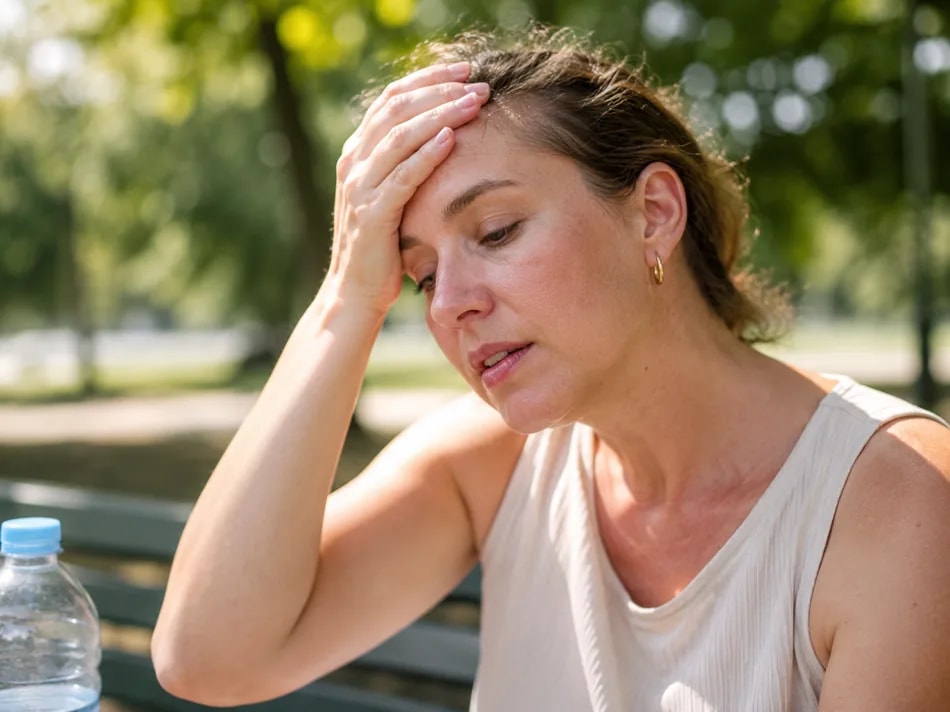
When a heatwave drags on, the body has to work hard to stay cool. Usually sweating, seeking shade and drinking enough water are enough, but sometimes the body can't keep up. That's when sunstroke, heat exhaustion, or in more serious cases heat stroke can develop. It's worth knowing the difference between these three, since heat stroke is always a medical emergency that needs fast action, while sunstroke usually eases quickly with the right first aid. This article covers the signs of heat illness, who is most at risk, and what to do if symptoms appear.
Sunstroke, heat exhaustion, or heat stroke – what's the difference?
Sunstroke happens when the unprotected head is exposed to direct sunlight for too long. Unlike heat exhaustion or heat stroke, sunstroke doesn't require physical exertion — simply spending a long time in the sun without a hat is enough. The symptoms come from irritation of the nervous system and include headache, nausea, dizziness, irritability, and confusion. Someone with sunstroke may seem slower than usual or disoriented. The good news is that symptoms usually improve quickly once the head cools down in the shade.
Heat exhaustion typically develops gradually, as the body loses more fluid and salt through sweating than it can replace. Symptoms include heavy sweating, fatigue, dizziness, headache, nausea, and thirst. The skin may feel cool and clammy, and the person generally feels weak.
Heat stroke is a more serious condition in which the body's temperature regulation fails completely. Body temperature can rise rapidly above 40°C (104°F), and sweating may even stop altogether. It can come with confusion, slurred speech, seizures, or loss of consciousness. Heat stroke can develop from untreated heat exhaustion, but it can also strike suddenly, for example during intense physical exertion.
The key difference between the three is how they progress: sunstroke symptoms ease quickly once the person cools down, heat exhaustion needs hydration and rest over a longer period, and heat stroke doesn't improve with self-care at all — body temperature stays dangerously high and the condition can quickly become life-threatening.
Signs of heat illness to watch for
Early signs of heat illness include fatigue, headache, dizziness, muscle cramps, and unusually strong thirst. Many people also notice trouble concentrating or irritability. At this stage, it helps to move to a cool place, drink water, and rest — symptoms usually ease quickly once the body or head has a chance to cool down.
If the person doesn't feel better within about half an hour to an hour of cooling down and drinking, or if confusion, vomiting, or fast, shallow breathing sets in, it could be a more serious situation.
These symptoms need immediate help
Heat stroke is always a medical emergency. Call emergency services immediately if you notice: a high body temperature, sweating that stops despite the heat, severe confusion or unusual behaviour, slurred speech, seizures, or loss of consciousness. While waiting for help, move the person to shade or a cool indoor space, remove excess clothing, and cool them down with a damp cloth, cool water, or a fan. If the person is conscious, offer small sips of cool water — never try to give fluids to someone who is unconscious.
Sunstroke also warrants medical attention if symptoms don't improve after 1–2 hours of rest and cooling down, if confusion or reduced consciousness develops, if sweating stops or urination becomes very scarce, or if the affected person is a child, an older adult, or someone with a serious underlying condition.
Who is most at risk?
Heat doesn't affect everyone the same way. Older adults, young children, people with chronic conditions such as heart or kidney disease, and those taking certain medications, such as blood pressure medication or diuretics, are at the highest risk. People doing heavy work outdoors and athletes are also vulnerable, since physical exertion further increases the body's heat production. Sunstroke risk is especially linked to going bare-headed and spending long periods in direct sunlight, so activities like gardening or a day at the beach without a hat raise the risk. It's worth keeping a closer eye on older adults living alone during prolonged heatwaves, since the sense of thirst and heat can weaken with age, and they may not notice their own symptoms in time.
What helps – cooling down, hydration, and rest
The best strategies are staying cool, staying well hydrated, and avoiding exertion during the hottest hours. Drink water steadily throughout the day, and after heavy sweating, a drink containing electrolytes can help restore salt balance. A cool shower, a damp cloth on the neck, forehead, or wrists, and good ventilation all help the body cool down quickly. For sunstroke, moving to shade, drinking fluids, and resting with the head elevated and supported is usually enough. Avoid heavy meals, alcohol, and strenuous exercise during the hottest parts of the day.
Everyday prevention
Plan outdoor activities for the morning or evening, when temperatures are cooler. Keep indoor spaces cool by closing curtains during the day and airing out rooms in the evening once the air outside cools down. Wear light, loose, pale-coloured clothing and protect your head and neck with a wide-brimmed hat — the single most effective way to prevent sunstroke. Don't forget sun protection either. Make sure older relatives are drinking enough, even if they don't feel particularly thirsty. Never leave a child or a pet in a car, not even for a moment.
When to contact a doctor
Mild heat-related symptoms, including sunstroke, usually settle with self-care. If you don't feel better after resting and rehydrating, or if symptoms recur and worry you, a remote consultation can be a good first step when the symptom is suitable for a remote assessment. If the situation calls for an in-person examination, the doctor will refer you onward. If heat stroke is suspected, though, the right place is always emergency care or the emergency number — not a remote appointment.
Summary
Heat-related symptoms usually progress in stages, from mild sunstroke or exhaustion to something more serious, and most cases can be prevented by protecting your head, cooling down, and drinking water in time. Heat stroke, however, is always an emergency where fast action matters. Recognising the signs of heat illness early, and paying particular attention to at-risk groups, makes it easier to get through a summer heatwave safely.
Written by Dokport's medical director and chief physician Anna Sipilä
Need a doctor?
Describe your symptoms in a remote appointment — a doctor assesses your situation 24/7.
Frequently asked questions
What's the difference between sunstroke and heat stroke?
What's the difference between heat exhaustion and heat stroke?
What are the first signs that heat is putting too much strain on the body?
When does heat stroke require calling emergency services?
Can heat stroke happen suddenly, without earlier warning signs?
Who is at the highest risk during a heatwave?
How do you treat sunstroke at home?
What should you drink during a heatwave?
How can you prevent sunstroke?
Can heat stroke or sunstroke happen indoors too?
Read also
- Fibromyalgia: symptoms, diagnosis, treatment and everyday self-care
- Winter blues or seasonal affective disorder? How to cope as autumn grows darker
- 5 Ways to Strengthen Your Immune System
- ADHD Symptoms in Adults: How to Recognise Them and What to Do Next
- Electrolytes: What They Do, Signs of Imbalance and When to See a Doctor
- Fatigue