

Sciatica pain relief at home: what actually helps
Key points
- Staying active supports recovery better than prolonged bed rest.
- Cold often suits the earliest, sharpest pain; heat tends to help the duller ache that follows.
- Gentle stretches for the buttock and hip can ease pressure around the sciatic nerve.
- Numbness, muscle weakness, or bladder or bowel control problems warrant a prompt medical assessment.
- Dokport's remote consultation lets you describe symptoms and get guidance without a traditional booking process.
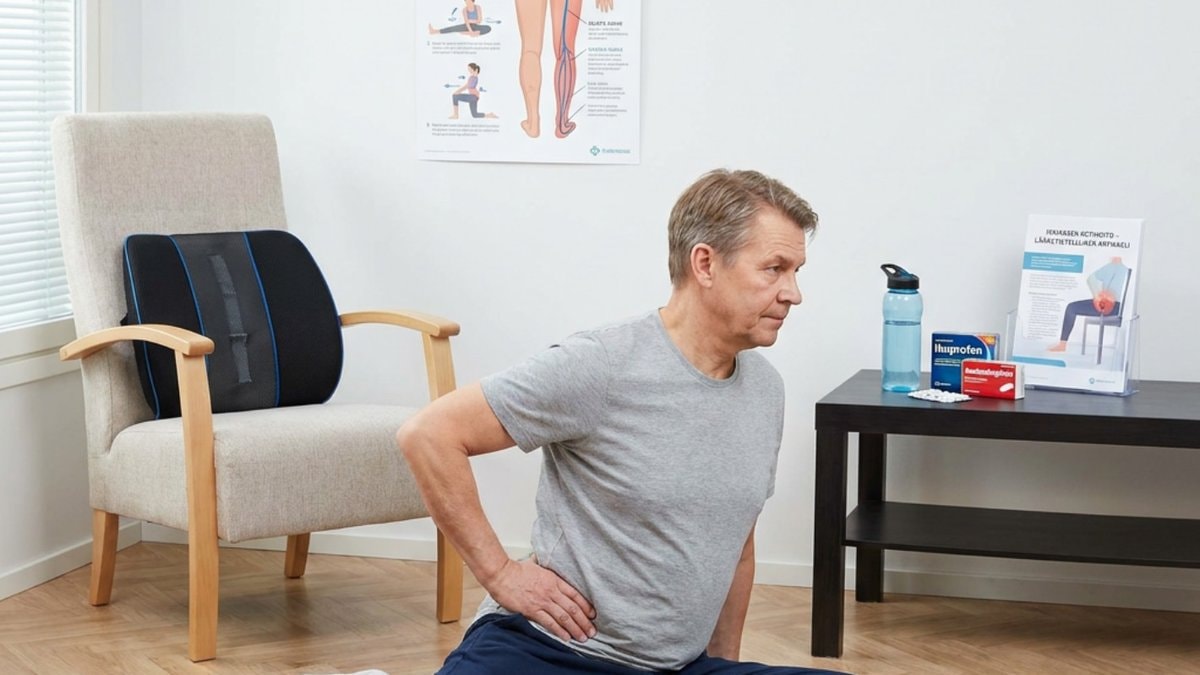
Sciatica pain usually starts in the buttock and travels down the back of the leg, sometimes reaching all the way to the foot, and it has a habit of making sitting, walking and sleeping difficult all at once. The reassuring part is that most sciatica settles within a few weeks with sensible self-care, and there is a lot you can do at home to make the waiting period more bearable. A fuller look at the causes, symptoms and treatment path for sciatica is available in Dokport's dedicated sciatica article; this piece focuses on what actually helps today.
Why staying active beats bed rest
The old advice to simply lie down and wait it out tends to backfire with sciatica, because long periods of bed rest usually slow recovery rather than speed it up. The back and hip stiffen quickly without movement, and that stiffness can aggravate the irritated nerve even further. Gentle activity such as short walks and ordinary daily tasks, done within whatever range feels tolerable, keeps the muscles and joints working and supports recovery far better than staying still.
Heat or cold — and when to use which
In the first day or two, when the pain is sharpest and most acute, a cold pack applied for short stretches can calm the area down. Once the sharpest phase has passed and the pain settles into more of a dull, tight ache, heat tends to work better, since it relaxes the muscles and improves circulation around the buttock and lower back. Neither should sit directly against bare skin for long periods, and a warm shower or heating pad can reasonably be used several times a day.
Stretches that can bring relief
Gentle stretches aimed at the buttock, hip flexor and hamstring can reduce pressure around the sciatic nerve and often bring the most relief first thing in the morning or after long periods of sitting. A simple option is lying on the back and slowly drawing one knee toward the chest for around thirty seconds at a time, or sitting and gently rotating the torso toward the painful side until the buttock area feels a mild pull. A stretch should never turn into sharp pain; the right sensation is a moderate pull, nothing more.
Small everyday changes at a desk and when lifting
Long unbroken stretches of sitting put extra load on the lower back and can worsen sciatica symptoms, so standing up and taking a short walk every so often through the working day is worth building into the routine. When lifting, the back stays straighter if the load is taken through the legs with the knees bent rather than by bending forward at the waist, and keeping heavy objects close to the body during the lift reduces strain considerably. A small cushion supporting the lower back can also ease pressure during long stretches at a desk.
Painkillers as support, not a substitute
Ordinary over-the-counter painkillers can make it easier to move and stretch, and they tend to work best alongside the right mix of heat, movement and rest rather than replacing any of them. Whether a particular painkiller is suitable, the right dose, and any interactions with other medication are worth checking with a pharmacist or doctor, especially if painkillers are needed repeatedly over several days.
When home care isn't enough — the warning signs to watch for
Most sciatica does not need emergency care, but a handful of symptoms call for a prompt medical assessment. These include sudden, marked numbness or muscle weakness in the leg, difficulty controlling bladder or bowel function, numbness across the inner thighs or around the genital area, and pain that keeps getting worse despite weeks of sensible home care. In any of these situations, it is worth seeking assessment without delay, since they can point to a more significant nerve compression.
Summary
Sciatica is uncomfortable, but most cases improve with movement, well-timed heat or cold, gentle stretching and a few small everyday adjustments. Avoiding prolonged bed rest and staying as active as the pain allows is a genuinely better route to recovery than staying still. Sudden numbness, muscle weakness, or trouble controlling bladder or bowel function are signs that warrant a prompt medical assessment.
Written by Dokport's medical director and chief physician Anna Sipilä
Need a doctor?
Describe your symptoms in a remote appointment — a doctor assesses your situation 24/7.
Frequently asked questions
Should I stay in bed with sciatica?
Does heat or cold work better for sciatica?
Which stretches are safe for sciatica?
How long does sciatica usually last?
Can I still work with sciatica?
When does sciatica need emergency care?
Do over-the-counter painkillers help with sciatica?
Can sciatica be prevented?
Is there a best sleeping position for sciatica?
Is sciatica the same thing as regular back pain?
Read also
- A Cold and the Online Doctor – When a Remote Consultation Is Enough
- 5 Ways to Strengthen Your Immune System
- Prolonged Cough: Causes, Treatment and When to See a Doctor
- Erectile dysfunction treatment — easy and discreet
- Acne and the Online Doctor – When a Remote Consultation Is Enough
- Online Doctor: What You Can Treat at a Virtual Appointment