

Sleep Apnea: Symptoms, Causes and When to See a Doctor
Key points
- Sleep apnea means repeated breathing pauses during sleep caused by the upper airway narrowing or closing.
- The single biggest risk factor is excess weight, but structural features, alcohol and smoking also raise the risk.
- The most typical symptoms are snoring, breathing pauses, severe daytime sleepiness, and problems with memory and concentration.
- Lifestyle changes can be enough for mild cases, but moderate to severe sleep apnea usually needs CPAP therapy or an oral appliance.
- It's worth seeing a doctor once daytime sleepiness interferes with everyday life, driving or work, or once a partner has noticed repeated breathing pauses at night.
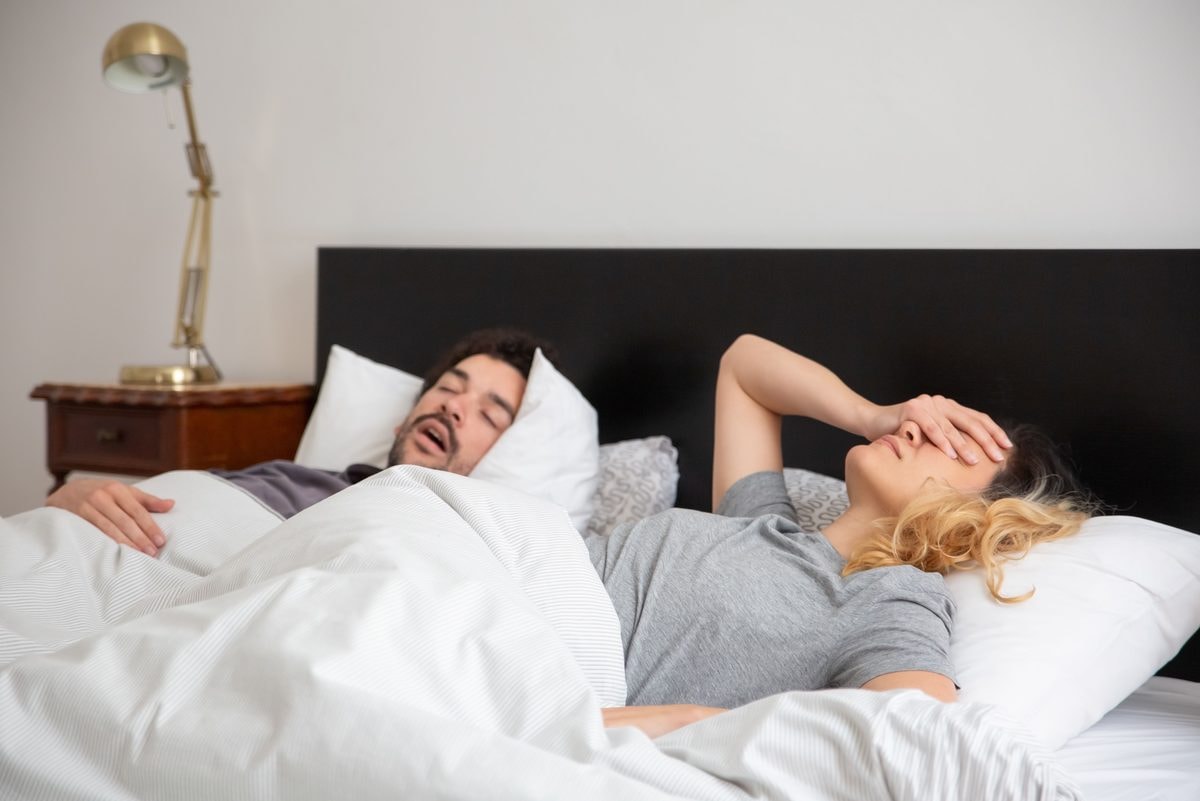
Sleep apnea refers to repeated pauses in breathing during sleep, caused by the upper airway narrowing or briefly closing off. A pause can last anywhere from a few seconds to over a minute, and it typically ends with a short arousal that the sleeper rarely notices consciously. A partner, however, often notices something different: loud snoring interrupted by brief silences, followed by a gasp or snort as breathing restarts. Many people only recognise sleep apnea once daytime tiredness starts interfering with work, concentration or mood. This article explains what causes sleep apnea, how to recognise it, what genuinely helps at home, and when the symptoms are worth a doctor's assessment.
What is sleep apnea?
Clinically, sleep apnea is diagnosed when breathing pauses or significant reductions in airflow occur during sleep on average at least five times per hour, together with symptoms such as daytime sleepiness. Brief, isolated pauses happen to almost everyone occasionally and don't by themselves indicate a disorder. The large majority of cases are obstructive sleep apnea, where the airway is blocked by soft tissue in the throat relaxing during sleep. A much rarer form, central sleep apnea, has a different cause rooted in how the brain signals breathing rather than a physical blockage; this article focuses on the more common obstructive form. Severity is usually classified as mild, moderate or severe, based on how often breathing stops per hour of sleep. In severe cases, a person can experience hundreds of pauses in a single night, breaking sleep into short, shallow fragments and preventing the deep, restorative sleep the body needs.
What causes sleep apnea?
The single biggest risk factor is excess weight: roughly two out of three people with sleep apnea are overweight or living with obesity, because fat tissue around the neck and throat narrows the airway when lying down. Other common contributors are structural features of the face, nose and throat — a narrow nasal passage, a misaligned bite, a short, thick neck, or enlarged tonsils. Alcohol, smoking and medications that act on the central nervous system, such as sedatives or sleeping pills, increase the risk because they relax the throat muscles further and lengthen the pauses. The same applies to temporary nasal congestion from a cold, seasonal allergies or tobacco smoke. In women, risk rises after menopause, and during pregnancy, weight gain, fluid retention and a raised diaphragm can all contribute to breathing disturbances during sleep. Sleep apnea also tends to run in families, though the exact genetic mechanism isn't well understood. An underactive thyroid can add to the risk too, since it affects tissue swelling and muscle function. Many people have more than one contributing factor at once — excess weight combined with evening alcohol use or seasonal congestion, for example — which is why symptoms can fluctuate with the season or with changes in life circumstances.
What are the common symptoms of sleep apnea?
The clearest sign usually shows up during the day: fatigue that feels unusually heavy and can lead to nodding off in meetings, in front of the television, or even behind the wheel. Many people describe the feeling less as ordinary tiredness and more as exhaustion or a lack of drive, and it often comes with memory lapses, difficulty concentrating and irritability — symptoms that are easy to mistake for stress or something else entirely. At night, the typical sleep apnea symptoms are loud snoring, breathing pauses noticed by a bed partner, waking up gasping or choking, restless and fragmented sleep, and a dry mouth on waking. Some people also experience night sweats, needing to urinate more often overnight, morning headaches, and — somewhat counterintuitively — insomnia despite feeling exhausted. Sleep apnea can also affect libido and contribute to erectile difficulties, and some people notice heart palpitations or chest discomfort at night, both of which are always worth investigating properly. Not everyone with sleep apnea snores, so the absence of snoring doesn't rule it out.
What genuinely helps with sleep apnea at home?
Lifestyle changes are the foundation of treatment, regardless of whether device-based therapy is needed later. If weight is a factor, losing even a modest amount can meaningfully reduce the number of breathing pauses, since a small drop in weight eases the pressure on the throat's soft tissue. Regular exercise helps even when weight doesn't change much, because it improves the tone of the tissues and muscles involved in breathing. Cutting back on alcohol, particularly in the evening, and avoiding sedatives close to bedtime reduces the excessive relaxation of throat muscles that lengthens pauses. Quitting smoking helps too, since smoke increases swelling in the throat and nasal lining. Nasal congestion often responds well to saline rinses and, where needed, a corticosteroid nasal spray from the pharmacy, which reduces swelling without significant side effects. If pauses and snoring happen mainly when sleeping on the back, training the body to sleep on its side — for example by sewing a small object into the back of a nightshirt — can noticeably cut the number of pauses. Compression stockings worn during the day can help too, since they reduce fluid build-up in the legs that would otherwise shift to the neck area overnight and add to airway narrowing. Getting enough total sleep matters on its own, since sleep deprivation makes symptoms worse, and a consistent bedtime supports the same goal. The bedroom environment plays a role as well: a room that's too warm, bright lights, or screen use right before bed can all make already fragmented sleep feel even more exhausting. An evening routine that involves switching off screens in good time and avoiding heavy meals close to bedtime helps too, since a full stomach and late eating can worsen snoring and airway narrowing.
How is sleep apnea diagnosed?
Working out whether sleep apnea is behind the symptoms usually starts with a conversation covering sleep quality, lifestyle, other health conditions and any occupational demands around alertness. A doctor's examination typically looks at blood pressure, body mass index, neck circumference, and the structure of the face and throat, all of which can predispose someone to airway narrowing. A standardised symptom questionnaire is often used to help gauge severity before any measurements are taken. The actual diagnosis relies on a sleep study — usually a home sleep test using a portable device — that measures the number and length of breathing pauses along with blood oxygen levels overnight. Occasionally a more extensive study that also records brain activity is needed, when more detail about sleep structure itself is useful alongside the breathing data. Where appropriate, patients are referred on to an ear, nose and throat specialist, a respiratory specialist, or a dentist who can assess whether a mandibular advancement device might be a good fit. Testing should be arranged promptly if the person works in a job that demands sustained alertness, has a significant cardiovascular condition, is pregnant, or has an upcoming procedure that requires general anaesthesia.
How is sleep apnea treated according to severity?
Treatment is tailored to severity, symptoms and individual circumstances, with the goals of reducing daytime sleepiness, protecting work and daily functioning, and preventing the health conditions linked to untreated sleep apnea. For moderate to severe sleep apnea, the first-line treatment is CPAP — continuous positive airway pressure — in which a small sleep apnea machine gently pushes pressurised air through a mask and tubing to keep the airway open throughout the night. CPAP therapy is highly effective at reducing daytime sleepiness and often improves attention, memory and mood too, alongside measurable benefits for blood pressure and heart function when used consistently. Getting used to the device can take a few weeks, and finding the right mask sometimes takes some trial and error; a dry or congested nose is a common, usually manageable side effect. In milder or moderate cases, or when CPAP genuinely doesn't work for someone, a custom-fitted oral appliance made by a dentist can be an effective alternative: it gently repositions the lower jaw forward and stops the tongue from collapsing into the throat. This kind of device requires reasonably healthy teeth and gums, and long-term use can cause mild changes to the bite. Surgery is considered only rarely, and might involve the nose, throat or jaw area; weight-loss surgery may also be discussed if body mass index is very high, though it doesn't usually eliminate the need for sleep apnea treatment entirely, even if it reduces the severity. There is currently no medication approved specifically to resolve the underlying airway narrowing itself, so lifestyle changes and device-based therapy remain the cornerstones of treatment.
Sleep apnea across different stages of life
Sleep apnea is clearly more common in men than in women, and it clusters around middle age, though the gap narrows after menopause as hormonal changes make the throat's soft tissue more prone to relaxing. Women also tend to describe their symptoms somewhat differently — more as exhaustion or low mood than dramatic daytime sleepiness — which can delay the right diagnosis. During pregnancy, weight gain, fluid retention and a raised diaphragm can cause temporary breathing disturbances during sleep, and it's worth mentioning these to a doctor or midwife sooner rather than later. In younger adults, a clear structural cause — an unusual bite, a narrow nasal passage — is more often behind the condition, while in older adults, excess weight and general tissue laxity tend to play a bigger role. In children, sleep apnea is most often linked to enlarged tonsils or adenoids, and a child's symptoms always warrant a separate assessment, since the causes and treatment pathway differ from those in adults. Among working-age adults, the condition can be especially easy to miss, because tiredness, irritability and poor concentration are readily blamed on a busy schedule, shift work or stress, leaving the real cause unaddressed for a long time. For shift workers specifically, sleep apnea symptoms can blend into the sleep deprivation that shift work itself causes, making the two harder to tell apart without a proper evaluation.
Common misconceptions about sleep apnea
One widespread belief is that only clearly overweight people develop sleep apnea, but people of normal weight can have significant breathing pauses too, often due to structural factors. Another common misconception is that loud snoring always means sleep apnea and quiet sleep rules it out; snoring is a frequent but not essential symptom, and some people with sleep apnea barely snore at all. Many also assume that a CPAP machine is the only possible treatment, when in reality lifestyle changes alone, or an oral appliance, are often enough for milder cases. Sleep apnea is sometimes seen as purely a sleep-quality issue, yet left untreated it places real strain on the heart and circulation and is linked to a higher risk of conditions including high blood pressure. Finally, it's easy to assume that persistent tiredness is simply explained by a busy lifestyle or getting older, but unusually heavy, ongoing daytime sleepiness is always worth investigating properly rather than accepting it as the new normal.
When do sleep apnea symptoms need a doctor's assessment?
Some symptoms can go unaddressed for a long time, but there are situations where it's genuinely worth not putting off an assessment. If daytime sleepiness is severe enough to cause dozing off in meetings, in front of the television, or while driving, or if a partner reports repeated breathing pauses at night, it's worth booking an appointment to look into it properly. The same goes for recurring morning headaches, a clear decline in memory or concentration, or a drop in mood that doesn't have another obvious explanation. A more urgent assessment is warranted if the person works in a role where alertness is safety-critical, such as professional driving, or has a known serious cardiovascular condition, since untreated sleep apnea places significant strain on the heart and circulation. Pregnant women and anyone due to undergo a procedure requiring general anaesthesia should also mention symptoms to a doctor sooner rather than later. If nighttime breathing pauses come with chest pain, an irregular or racing heartbeat, or other alarming sensations, these shouldn't be worked through alone — the cause is worth investigating without delay. The same applies if tiredness has come dangerously close to causing you to fall asleep while driving; in that case, it's best to stop driving and get an assessment before the next longer trip.
Sleep apnea, work and everyday life
Left untreated, sleep apnea doesn't stay confined to the night — it spills directly into daily life. Severe daytime sleepiness and a tendency to doze off increase the risk of both road accidents and workplace injuries, which is why driving while drowsy is worth avoiding, and longer trips call for frequent breaks. Treatment usually restores alertness to normal, which in turn removes most barriers to driving or to jobs that demand sustained attention. In relationships, ongoing snoring and restless sleep often affect a partner too, who may end up with poor sleep quality simply from sharing the bed. Left untreated over the long term, the condition is also linked to a higher risk of high blood pressure, heart rhythm problems and type 2 diabetes, which is why recognising the condition and seeking treatment is worth thinking about not just for better sleep, but for longer-term health as well.
Can sleep apnea be prevented in the long run?
There's no guaranteed way to prevent sleep apnea entirely, but the same steps used to manage symptoms also lower the risk over time. Weight management is the single most important factor here, since maintaining a healthy weight — or avoiding excess weight in the first place — reduces the pressure on the neck and throat's soft tissue over the long term, not just during an active flare-up. Regular exercise supports the same goal and improves overall sleep quality even when weight itself doesn't change. Moderate alcohol use, particularly avoiding it in the evening, not smoking, and using sedatives thoughtfully all reduce the excessive relaxation of throat muscles that underlies many breathing pauses. Treating nasal congestion early, for example by properly managing allergy symptoms, keeps the airway clearer at night too. A consistent sleep schedule and adequate total sleep help the body cope better even on nights when breathing isn't entirely normal throughout. None of these steps guarantees symptoms will disappear completely, especially where a clear structural cause is involved, but they meaningfully lower the risk of developing the condition and ease its severity for most people. If new symptoms appear, for instance after weight gain or a change in life circumstances, it's worth revisiting the issue rather than putting the tiredness down to a busy schedule.
Summary
Sleep apnea is a common condition that often goes unrecognised for a long time, in which breathing repeatedly stops during sleep as the upper airway narrows. The main risk factors are excess weight, structural features, alcohol and smoking, and the most typical symptoms are snoring, breathing pauses, daytime sleepiness, and problems with memory and concentration. Many symptoms improve with lifestyle changes alone — losing weight, exercising, cutting back on alcohol — but moderate to severe sleep apnea usually calls for CPAP therapy or an oral appliance as well. It's worth seeing a doctor at the latest once daytime sleepiness starts interfering with everyday life, driving or work, or once a partner has noticed repeated breathing pauses at night. Recognised and treated early, sleep apnea symptoms are, in most cases, very manageable, and many people notice a clear improvement in alertness, memory and mood within just a few weeks of starting treatment.

Need a doctor?
Describe your symptoms in a remote appointment — a doctor assesses your situation 24/7.