

Pneumonia and the Online Doctor – Why an In-Person Assessment Is Needed
Key points
- Pneumonia often develops as a complication after a cold, flu or another respiratory infection.
- Small children, people over 65 and those with chronic lung or heart disease are at the highest risk.
- Pneumonia cannot be diagnosed or treated by remote consultation alone, because the diagnosis requires a physical examination and often a chest X-ray.
- A skilled online doctor recognises the warning signs and refers you to an in-person assessment at even the slightest suspicion.
- Shortness of breath, chest pain or rapidly worsening general condition need urgent care.
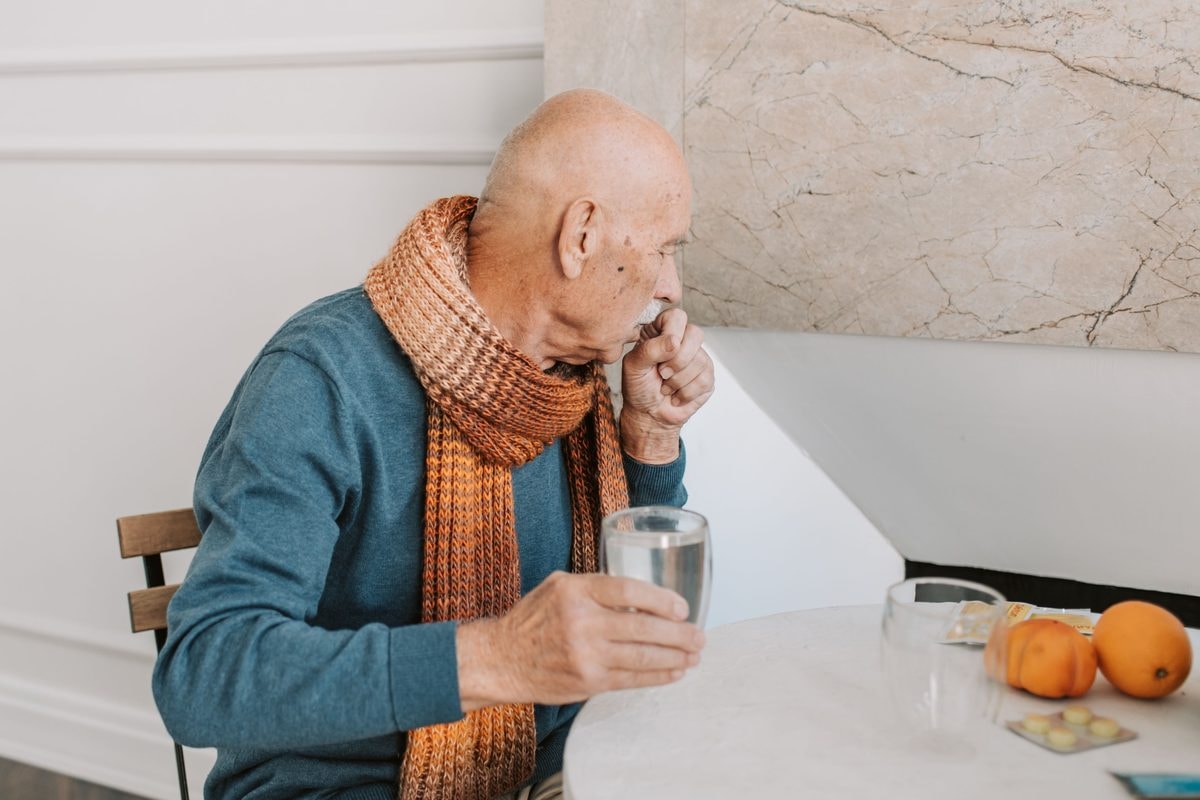
Pneumonia is an infection of the lung tissue. In adults it is usually caused by bacteria, most often pneumococcus, but viruses and mycoplasma can also cause it. It typically develops as a complication of a viral respiratory infection, when a cold or flu that seemed to be easing turns worse again.
A typical pattern is that a person has had a cold for a few days, starts to feel better, and then the fever returns or rises higher. The cough becomes deeper, and breathing may feel heavier than before. The general condition can deteriorate quickly.
Who Is at Risk?
Pneumonia is most common in small children and in people over 65. The risk is also higher for people with a chronic lung disease, heart failure or another serious underlying illness, and for those whose immunity is weakened. Smoking, a previous pneumonia and poor oral hygiene increase the risk as well.
In these groups pneumonia can progress quickly and lead to serious complications. That is why the threshold for seeking care should be low when a respiratory infection takes an unusual course.
Why an Online Doctor Cannot Treat Pneumonia
The diagnosis of pneumonia is based on a physical examination and is confirmed with a chest X-ray. The doctor listens to the lungs, measures breathing rate and oxygen levels and often takes blood tests. None of this can be done reliably remotely.
Pneumonia, and even a strong suspicion of it, is treated with antibiotics prescribed after an in-person assessment. The doctor also decides whether the patient can be treated at home or needs hospital care. Most pneumonias can be treated at home once the diagnosis has been made.
How the Online Doctor Helps
An online doctor is still a useful first step when a cold or flu does not go as expected. In the chat, the doctor asks about the course of the illness, the fever, breathing and your underlying conditions. Based on this, the doctor assesses whether the symptoms fit an ordinary respiratory infection or whether pneumonia needs to be ruled out.
A skilled online doctor refers you to an in-person assessment readily, at even the slightest suspicion of pneumonia. This is good medical practice, not a failure of the remote consultation. You receive clear instructions on where to go and how urgently, so you do not have to guess.
What to Tell the Doctor in the Chat
An online doctor cannot listen to your lungs, so your description stands in for part of what would be examined at a clinic. The more precisely you describe how the illness has progressed, the more reliably the doctor can assess it. Useful details include:
- when the symptoms started and whether there was a phase when you already felt better
- your highest temperature and when you measured it
- how your breathing feels at rest and when you move, for example on the stairs
- whether you are able to drink and eat as usual
- your underlying conditions and the medicines you take regularly
- the result of any COVID-19 or flu home test.
If you have a fingertip pulse oximeter at home, mention its reading too. The reading alone does not settle anything, but it adds to your description.
When the Doctor Refers You to an In-Person Visit
A referral does not always mean the same thing. The doctor tells you how urgently you need to be seen:
- In an emergency, call 112 immediately. Examples are severe shortness of breath, bluish lips, confusion, or someone who cannot stay awake.
- Go to an emergency clinic the same day if breathing has become difficult or your general condition is getting worse quickly.
- Otherwise the doctor may advise you to book an appointment at a health centre or medical clinic, where your lungs can be examined and the necessary tests done.
In Finland, if you are unsure where to go, you can call the medical helpline on 116117.
You receive the online doctor's assessment and instructions in writing, so you can show them at the visit. Bring a list of the medicines you take as well. That way the next doctor does not have to start from the beginning.
Summary
Pneumonia often develops as a complication after a cold or flu, and risk groups are especially vulnerable. The diagnosis requires a physical examination and often a chest X-ray, so pneumonia cannot be treated by remote consultation alone. An online doctor helps by assessing how your respiratory infection is progressing and, at even the slightest suspicion of pneumonia, refers you to an in-person assessment. Breathing difficulties and chest pain always need urgent care.
Read more on this topicPneumonia: Symptoms, Treatment, Recovery, and When to Seek HelpWritten by Dokport's medical director and chief physician Anna Sipilä
Need a doctor?
Describe your symptoms in a remote appointment — a doctor assesses your situation 24/7.
Frequently asked questions
What is pneumonia?
Is pneumonia a complication of a cold?
What are the symptoms of pneumonia?
Who is at risk of pneumonia?
Can an online doctor treat pneumonia?
What should I do if the online doctor refers me to an in-person visit?
Read also
- Impetigo: Symptoms and Treatment
- Influenza and Online Doctor – Identify It Early, Treat It Fast
- A Cold and the Online Doctor – When a Remote Consultation Is Enough
- Acne and the Online Doctor – When a Remote Consultation Is Enough
- Online Doctor: What You Can Treat at a Virtual Appointment
- Creatine: benefits, side effects, and how to use it safely