

Which Vitamin Deficiency Causes Hair Loss? – Causes and Treatment
Key points
- Vitamin and mineral deficiencies can contribute to hair loss, but they do not explain every case.
- Iron deficiency is the most common nutritional cause, and a low ferritin level can be linked to hair loss even before anaemia develops.
- Deficiencies of vitamin D, vitamin B12, and zinc can also affect the hair, while a true biotin deficiency is rare.
- Correcting deficiencies only helps when they are the real cause — hereditary hair loss does not respond to vitamins.
- Check for a possible deficiency with blood tests and talk to a doctor, including remotely, if you lose more hair than usual.
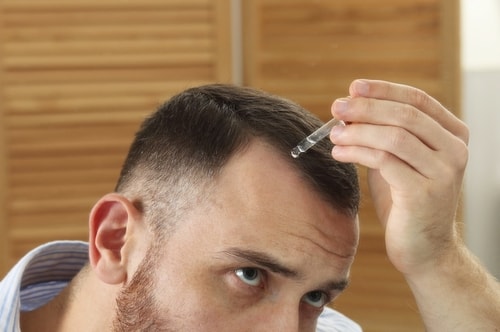
When you start losing more hair than usual, one of the first questions many people ask is whether a vitamin deficiency could be behind it. Nutrition genuinely matters for hair health, and certain deficiencies can increase hair loss. But not all hair loss is caused by vitamins, so it is worth finding the real reason. This article covers which vitamin and mineral deficiencies are linked to hair loss, how they are diagnosed, and when you should talk to a doctor.
Iron deficiency is the most common nutritional cause
The most common nutrition-related cause of hair loss is not actually a vitamin but iron deficiency. Iron is needed to carry oxygen to tissues, including the hair follicles. When the body's iron stores run low, hair can shift into a resting phase and start shedding more than usual. Iron deficiency is especially common in women with heavy periods, as well as during and after pregnancy.
Iron stores are measured with a ferritin value, which reflects the amount of stored iron in the body. A low ferritin level can be linked to hair loss even before actual anaemia develops. Interpreting ferritin and other iron values is best done together with a doctor, who assesses the situation as a whole.
Vitamin D deficiency
Vitamin D plays a role in the hair follicle growth cycle, and its deficiency has been linked to hair loss. Vitamin D deficiency is fairly common, particularly during the darker months when sunlight is limited. Although the connection to hair loss is not as strong as with iron deficiency, a low vitamin D level is worth taking into account as part of the overall picture.
Vitamin B12 deficiency
Vitamin B12 is important for the formation of red blood cells and for oxygen transport. A deficiency can also affect the function of hair follicles and therefore increase hair loss. B12 deficiency is more common among people following vegetarian or vegan diets, since B12 comes mainly from animal sources.
Zinc deficiency
Zinc is involved in hair growth and tissue renewal. A zinc deficiency can show up as thinning hair and increased shedding. Zinc deficiency is less common than iron deficiency, and a zinc supplement should not be started on your own without a confirmed need, as excess zinc can interfere with the absorption of other trace elements.
What about biotin?
Biotin, or vitamin B7, is often marketed as a hair vitamin. However, a true biotin deficiency is rare, and a biotin supplement is mainly helpful when a deficiency has actually been diagnosed. If you eat a varied diet, biotin deficiency is an unlikely cause of hair loss. Biotin supplements can also distort the results of some laboratory tests, so it is worth mentioning their use to your doctor.
When a vitamin deficiency is the cause – and when it is not
It is important to remember that not all hair loss is caused by a vitamin or mineral deficiency. The most common form of hair loss is hereditary, or androgenetic, hair loss, which does not respond to vitamins. Telogen hair loss following stress, illness, or childbirth, as well as alopecia areata, are also possible causes. That is why correcting deficiencies only helps when the hair loss is actually caused by them.
For this reason, it is best not to guess the cause or start taking a wide range of supplements at random. The safest approach is to check for a possible deficiency with blood tests and correct it as needed, following a doctor's advice.
Talk to a doctor online
If you suspect a vitamin deficiency could be behind your hair loss, you can discuss it with a doctor remotely. The doctor assesses your situation, asks about your symptoms and diet, and can order blood tests to check values such as ferritin, vitamin D, and B12. An online consultation can be a good first step when your situation is suitable for remote assessment. If your symptoms point to another cause or need closer examination, the doctor will guide you further.
Summary
Vitamin and mineral deficiencies can contribute to hair loss, and the most common nutritional cause is iron deficiency. Deficiencies of vitamin D, vitamin B12, and zinc can also affect the hair. However, they do not explain every case of hair loss, so it is worth finding the real cause through blood tests and a doctor's assessment. That way, deficiencies are corrected only when it truly helps.
Written by Dokport's medical director and chief physician Anna Sipilä
Need a doctor?
Describe your symptoms in a remote appointment — a doctor assesses your situation 24/7.
Frequently asked questions
Which vitamin deficiency most commonly causes hair loss?
Can iron deficiency cause hair loss?
How is a vitamin deficiency diagnosed?
Does vitamin D help with hair loss?
Should I take biotin for my hair?
Can hair loss be fixed with supplements?
How quickly does hair recover after correcting a deficiency?
Is hair loss always a sign of a vitamin deficiency?
Can taking too many vitamins be harmful?
When should I see a doctor about hair loss?
Read also
- Finasteride for Hair Loss – How It Works, Cost and Prescription
- Hair loss: causes, treatments and when to seek help
- Erectile dysfunction treatment — easy and discreet
- Erectile dysfunction: causes, treatment and medications
- Low Testosterone Symptoms, Causes, Diagnosis and Treatment in Men
- Sildenafil: Uses, Timing, Side Effects, and Safe Use