

Hair loss: causes, treatments and when to seek help
Key points
- Hair loss is not a single condition but a visible change whose cause is best understood from the pattern and timing – gradual thinning, patchy loss or sudden diffuse shedding.
- Common causes include androgenetic alopecia (pattern baldness), telogen effluvium after illness, childbirth or stress, and alopecia areata, an autoimmune patchy loss.
- Hair can grow back when the follicle is still active and the cause is temporary or treatable, but regrowth is slow and takes several months.
- Treatment only works when it matches the cause: minoxidil or finasteride for androgenetic alopecia, correcting the trigger for telogen effluvium – no single shampoo or supplement fixes every case.
- See a doctor if hair loss is sudden, patchy, scarring or painful, or comes with fatigue, weight change or hormonal signs – early assessment can protect the remaining follicles.
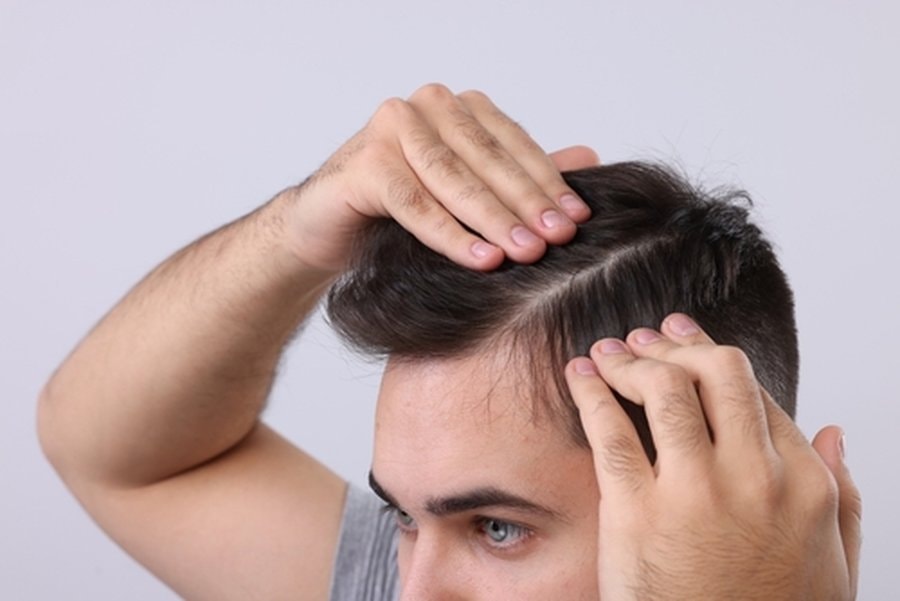
Hair loss can be unsettling, especially when it appears suddenly, becomes visible in photos or starts to affect confidence. Some daily shedding is normal, but noticeable hair thinning, bald patches, a receding hairline or diffuse hair loss can have many possible causes. The most useful first step is to look at the pattern, timing and any related symptoms.
Hair grows in cycles. At any given time, some hairs are growing, some are resting and some are naturally shedding. A temporary increase in shedding may happen after illness, childbirth, major stress, weight change or certain medicines. Gradual thinning over months or years may point more toward androgenetic alopecia, often known as male pattern baldness or female pattern hair loss. Patchy hair loss may suggest alopecia areata, an autoimmune condition.
What hair loss usually means
Hair loss is not one single condition. It is a visible change that can come from the hair follicle, scalp, hormones, immune activity, nutrition, medicines or physical strain on the hair.
A doctor usually considers three basic questions. Is the hair loss gradual or sudden? Is it spread evenly across the scalp or limited to patches? Does the scalp look healthy, inflamed, scaly, painful or scarred? These details matter because hair regrowth is much more likely when the follicles are still active and the underlying trigger can be treated or settles with time.
Gradual hair thinning is often caused by androgenetic alopecia. In this condition, genetically sensitive hair follicles become smaller over time. The hair becomes finer, shorter and less visible before the area looks thin. In men, this often appears as a receding hairline, thinning at the crown or both. In women, it more often causes widening of the parting and reduced density over the top of the scalp.
Sudden shedding all over the scalp often has a different story. Telogen effluvium happens when many hairs shift into the resting phase around the same time. The shedding may begin a few months after a physical or emotional stressor, such as childbirth, high fever, infection, surgery, major life stress or a significant dietary change. Acute telogen effluvium often has a good outlook, although recovery takes time.
Patchy hair loss can be caused by alopecia areata. This usually creates one or more smooth, round or oval bald patches. The condition is considered autoimmune, meaning the immune system reacts around the hair follicle. It is not contagious, and it may improve on its own, although the course can be unpredictable.
Common hair loss causes
Hair loss causes vary, and several factors can exist at the same time. A person may have inherited thinning and also experience temporary shedding after stress or illness. This is one reason self-diagnosis can be difficult.
Common causes include:
- Androgenetic alopecia, also called male pattern baldness or female pattern hair loss
- Telogen effluvium after illness, childbirth, stress, weight loss or another body stressor
- Alopecia areata, which causes patchy hair loss
- Scalp conditions such as seborrheic dermatitis, psoriasis or inflammation
- Iron deficiency, thyroid problems or other medical conditions
- Some medicines, including certain retinoids, cancer treatments and other prescription drugs
- Tight hairstyles, extensions or repeated pulling, known as traction alopecia
- Hair pulling disorder, also called trichotillomania
- Less common scarring scalp diseases, which need medical assessment
The pattern gives important clues. A slow receding hairline is different from sudden handfuls of hair in the shower. A round bald patch is different from hair breaking after bleaching or heat styling. It is also possible for hair to appear thinner because the hair shaft is breaking, even if the follicle is still producing hair.
Hair loss in men and male pattern baldness
Hair loss in men is commonly linked to androgenetic alopecia. In everyday language, this is male pattern baldness. It is influenced by inherited sensitivity to androgens, including DHT, a hormone made from testosterone. DHT can gradually shrink sensitive follicles, producing shorter and finer hairs.
The typical pattern starts at the temples, crown or both. Some men notice a receding hairline in early adulthood. Others keep their hairline but develop thinning at the crown. The speed varies greatly. Some men thin slowly for decades, while others notice a faster change.
Male pattern baldness is not dangerous, but it can be emotionally difficult. It may affect self-image, dating, work confidence or the feeling of aging earlier than expected. These concerns are valid reasons to discuss options with a doctor, especially if the change is causing distress.
Hair loss treatment for men may include topical minoxidil, finasteride, hair transplant surgery or a combination approach. Topical minoxidil and oral finasteride are established options for selected cases of male androgenetic alopecia. Finasteride works by reducing androgen effects in the hair follicle, and results usually require months of consistent use. It can also cause side effects, including sexual side effects and mood-related symptoms, so it should be discussed carefully with a doctor.
Female hair loss and hair loss in women
Female hair loss can be especially frustrating because it is often more diffuse and less obvious at first. Hair loss in women may appear as a wider parting, less volume in a ponytail, more scalp visibility under bright light or general thinning over the top of the head. The frontal hairline may remain relatively preserved.
What causes hair loss in women depends on the pattern and timing. Androgenetic alopecia is common, but so are telogen effluvium, iron deficiency, thyroid problems, postpartum hair loss, medication effects and scalp inflammation. In some women, signs such as irregular periods, acne or increased facial hair can suggest a hormonal condition such as polycystic ovary syndrome, which may require medical evaluation.
Female pattern hair loss is not simply the same as male pattern baldness in a different person. The distribution and treatment choices may differ. Women with androgenetic alopecia are often treated with topical minoxidil. Some may benefit from antiandrogenic medicines when signs of hormonal imbalance are present. Hair transplant surgery is often less useful for women when thinning is spread more evenly across the scalp.
Postpartum hair loss is another common situation. After pregnancy, hormonal shifts can push many hairs into the shedding phase. This can be dramatic, but it is often temporary. If shedding continues for a long time, is very heavy or comes with fatigue, heavy periods, weight change or other symptoms, a doctor can check for treatable causes.
Hair thinning, diffuse hair loss and telogen effluvium
Hair thinning can be gradual or sudden. Diffuse hair loss means shedding or reduced density across the scalp rather than a single patch. Telogen effluvium is a common cause of diffuse shedding.
The timing is often the clue. Hair may begin falling out two to four months after a trigger. The trigger may already be over by the time shedding starts, which can make the connection hard to see. A person may feel well again after an infection, operation or stressful period, then notice hair in the brush or shower weeks later.
Stress hair loss is often discussed casually, but it is more accurate to say that significant stress can contribute to telogen effluvium or worsen some conditions. Everyday stress alone does not explain every case. When hair loss is ongoing, severe or unclear, it is better to look for the full picture: recent illness, nutrition, weight change, medicines, menstrual history, thyroid symptoms, scalp symptoms and family history.
In many cases of acute telogen effluvium, hair regrowth happens gradually once the trigger has passed. Regrowth is usually not instant. New hairs need time to grow long enough to add visible density. This can take several months, and it is common to notice short new hairs along the hairline or parting before overall thickness improves.
Alopecia areata and patchy hair loss
Alopecia areata usually causes sudden patchy hair loss. The patches are often smooth and sharply defined. The scalp may look normal, although some people notice mild itching, tingling or sensitivity before or during shedding. It can also affect beard hair, eyebrows, eyelashes or body hair.
The condition is autoimmune and not contagious. It is medically harmless in itself, but it can be emotionally burdensome. The course is unpredictable: some patches regrow, some recur and some cases become more widespread.
Treatment depends on the extent and activity of the condition. Local corticosteroid treatments may be used for limited patches, and specialist care may be needed for more extensive disease. Some people choose cosmetic support such as hairpieces, eyebrow makeup or scalp camouflage while waiting to see how the condition develops. Emotional support is part of care, not an afterthought.
How to stop hair loss safely
The best way to stop hair loss depends on the cause. There is no single shampoo, vitamin or supplement that reliably treats all forms of hair loss. A practical approach is to reduce avoidable strain, support general health and seek diagnosis when the pattern suggests a medical cause.
Helpful steps include:
- Avoid tight hairstyles, harsh pulling and repeated tension on the hairline
- Treat dandruff, itching, scaling or scalp inflammation early
- Avoid starting supplements unless there is a likely deficiency or medical advice
- Review new medicines with a doctor if shedding began after treatment changes
- Eat enough protein and avoid extreme dieting
- Use gentle hair care while shedding is active
- Take photos every four to six weeks in similar lighting to track change
- Seek medical advice if hair loss is sudden, patchy, scarring, painful or persistent
It is understandable to want the best treatment for hair loss quickly. Still, the wrong treatment can waste time and money. Minoxidil may help androgenetic alopecia, but it will not solve every cause. Finasteride may be appropriate for some men, but not everyone. Iron tablets help only if iron deficiency is present. A careful diagnosis makes treatment more targeted.
Hair loss treatment options
Hair loss treatment can include self-care, medical treatment, scalp treatment, cosmetic support or procedures. The choice depends on the diagnosis, goals, safety and how much the hair loss affects everyday life.
Minoxidil is a common topical treatment for androgenetic alopecia. It is applied to the scalp and may reduce shedding or support regrowth in some users. It needs regular, long-term use to maintain benefit. Early shedding can happen in some people after starting, which can be alarming, but treatment decisions should be discussed with a pharmacist or doctor if unsure.
Oral minoxidil is sometimes discussed for hair regrowth, but it is different from topical minoxidil. Because oral minoxidil affects the whole body and can influence the cardiovascular system, it should only be used when prescribed and monitored by a doctor. It is not something to self-start or source without medical supervision.
Finasteride is used for some men with androgenetic alopecia. It works on the hormonal pathway connected with DHT. It may slow loss and support regrowth in some users, but it needs ongoing use and has possible side effects. Decisions about finasteride should include a calm discussion about benefits, risks, fertility plans, mood history and sexual side effects.
Hair transplant surgery can be an option when hair loss is stable enough and there is enough donor hair. It is most often considered for male pattern baldness, especially around the hairline or crown. A transplant does not stop the underlying tendency to lose non-transplanted hair, so medical treatment may still be discussed. For diffuse female hair loss, transplant suitability is more limited.
For alopecia areata, treatment may involve corticosteroid solutions, creams or injections, and specialist therapies in more extensive cases. For telogen effluvium, treatment often means identifying and correcting the trigger rather than forcing growth with a cosmetic product. For scarring alopecia, early specialist care is important because permanent follicle damage can occur.
Does hair grow back after hair loss?
Hair can grow back after hair loss if the follicle remains active and the cause is temporary or treatable. This is often the case with acute telogen effluvium, postpartum hair loss and some cases of alopecia areata. Regrowth is usually slow. A hair grows only a limited amount each month, so visible density takes time.
In androgenetic alopecia, regrowth is more limited because the follicles gradually miniaturize. Treatment may thicken some miniaturized hairs and slow further loss, especially when started early. Areas that have been completely bald for a long time are less likely to respond to medicines because the follicles may no longer be productive.
In scarring alopecia, regrowth in scarred areas is unlikely because the follicle can be destroyed. That is why symptoms such as scalp pain, burning, redness, scaling, pustules or shiny scar-like patches should be assessed promptly.
When should I see a doctor about hair loss?
You should consider seeing a doctor about hair loss when the change is sudden, severe, patchy, persistent or emotionally difficult. Medical help is also sensible if there are symptoms suggesting a wider health issue.
Seek assessment if you notice rapid shedding, bald patches, scalp pain, redness, scaling, sores, pus, itching that does not settle, or hair loss with fatigue, weight change, heavy periods, irregular periods or signs of hormonal imbalance. You should also seek care if hair loss follows a new medicine, if you are unsure whether treatment is safe for you, or if a child has unexplained hair loss.
Urgent care is rarely needed for hair loss alone, but prompt medical evaluation is important if scalp infection, severe inflammation, sudden widespread symptoms or scarring is suspected. Earlier evaluation can protect remaining follicles and reduce uncertainty.
How can Dokport help with hair loss?
Dokport can help when hair loss is worrying, unclear or difficult to manage alone. Through a remote doctor chat, you can describe the pattern, timing, scalp symptoms, medicines, recent health changes and any photos that may help the doctor understand what is happening.
A doctor can give personalized care guidance and help decide whether the likely cause fits androgenetic alopecia, telogen effluvium, alopecia areata, scalp inflammation or another explanation. When appropriate for the situation, medication may be prescribed, but this is never automatic. The doctor may also guide you to blood tests, dermatology assessment or an in-person visit if the symptoms suggest a condition that cannot be safely handled remotely.
The goal is fast, easy and safe access to medical support without a traditional appointment booking process. For hair loss, that can be especially useful when you want to know whether watchful waiting is reasonable, whether treatment could help, or whether the pattern needs closer medical evaluation.
Living with thinning hair while treatment takes time
Even when hair regrowth is possible, the waiting period can be hard. Hair changes are visible, personal and often tied to identity. It is reasonable to care about them.
Simple cosmetic measures may help while the medical side is being clarified. A different haircut, scalp powder, tinted dry shampoo, gentle volumizing products or a change in parting can make thinning less noticeable. For more extensive hair loss, wigs, toppers, scarves or eyebrow techniques may support confidence. These choices are not superficial; they can make daily life easier.
It also helps to set realistic timelines. Many treatments need at least three to six months before early results can be judged, and a year may give a clearer view. Stopping and starting treatments too quickly can make it harder to know what is working. If a treatment causes side effects, irritation or worry, discuss it rather than simply pushing through.
A practical way to think about hair loss
Hair loss is easier to handle when the question changes from “Why is my hair falling out?” to “What pattern is this, and what is the safest next step?” Gradual thinning, patchy loss and sudden diffuse shedding each point in different directions.
For many adults, hair loss is not dangerous, but it can still deserve care. Some causes settle with time. Some respond to treatment. Some need tests. Some require a dermatologist. A calm, structured assessment can prevent both unnecessary alarm and unnecessary delay.
The most important message is this: hair loss treatment works best when it matches the cause. Minoxidil, finasteride, anti-inflammatory treatment, blood tests, scalp care, hair transplant planning and watchful waiting all have a place, but not for every person. If the change is new, distressing or unclear, medical advice can help you choose the next step with more confidence.

Need a doctor?
Describe your symptoms in a remote appointment — a doctor assesses your situation 24/7.
Frequently asked questions
Is hair loss normal?
Why is my hair falling out suddenly?
What are the most common hair loss causes?
What causes male pattern baldness?
What causes hair loss in women?
Is female hair loss treatable?
Can stress cause hair loss?
What is telogen effluvium?
What is alopecia areata?
Is androgenetic alopecia permanent?
Does minoxidil work for hair loss?
Is oral minoxidil safe?
Does finasteride stop hair loss?
Is a hair transplant a cure?
Does hair grow back after hair loss?
When should I see a doctor about hair loss?
Read also
- Finasteride for Hair Loss – How It Works, Cost and Prescription
- Which Vitamin Deficiency Causes Hair Loss? – Causes and Treatment
- Erectile dysfunction: causes, treatment and medications
- Low Testosterone Symptoms, Causes, Diagnosis and Treatment in Men
- Sildenafil: Uses, Timing, Side Effects, and Safe Use
- Tadalafil: Uses, Dosage, Side Effects, and When to Seek Medical Advice