

Plantar fasciitis: what causes heel pain, how is it treated and when should you see a doctor?
Key points
- Plantar fasciitis is an overuse-related pain condition of the sole's connective tissue band rather than a true inflammation, typically felt at the front of the heel with the first steps in the morning.
- It usually results from sudden or prolonged overload of the plantar fascia — new shoes, standing work, or increased walking or running — and excess weight, age and mild flat feet raise the risk.
- Home care centres on regular stretching of the fascia and calf, adjusting load to pain, supportive footwear, insoles or taping when needed, and a night sock or splint.
- The condition usually settles on its own over weeks to months, and treatment rarely relies on one method alone — combining several approaches with patience works best.
- See a doctor if home care doesn't help within a reasonable time, pain significantly limits daily life or work, or there's unexplained swelling, fever, or a sudden injury.
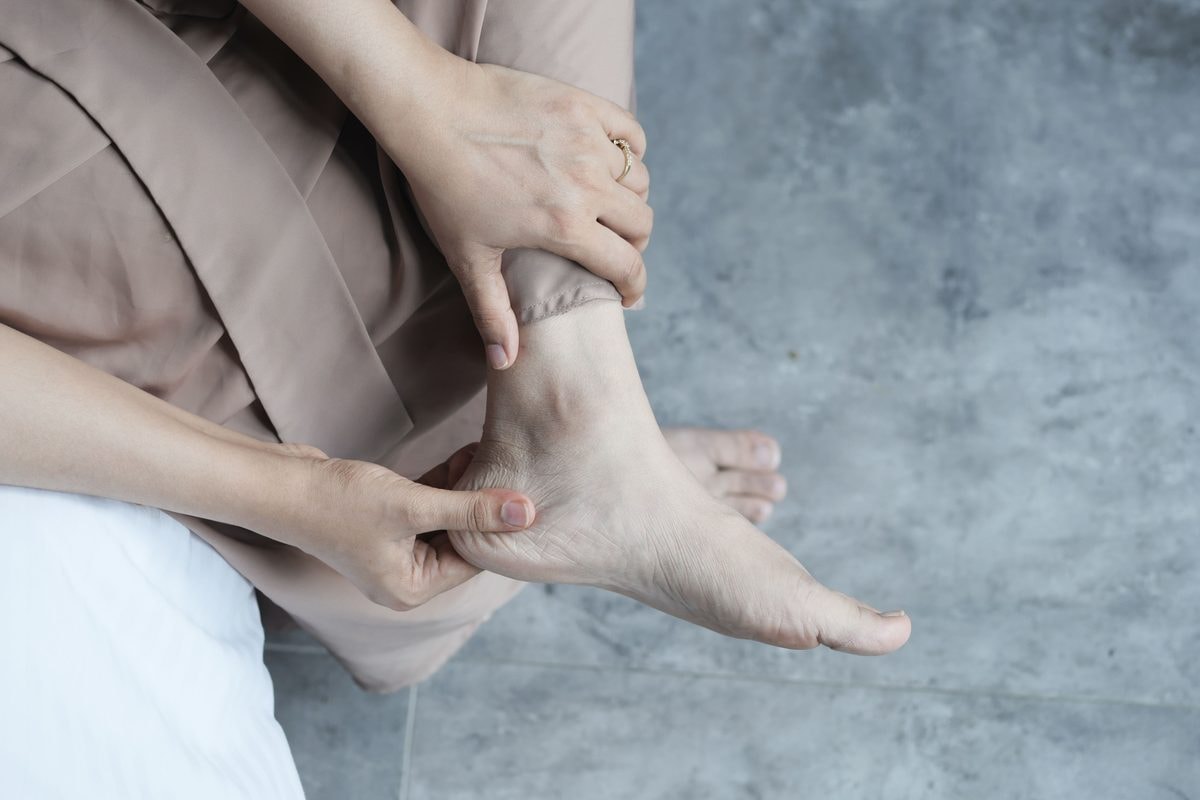
Plantar fasciitis is one of the most common causes of pain on the sole of the foot. It typically causes pain towards the front of the heel, especially with the first steps in the morning. For many people, the pain develops gradually. If it persists, it can make walking, working and exercising more difficult. The good news is that plantar fasciitis is usually a benign condition that settles over time, and home treatment can often help before a medical assessment is needed.
This article provides practical information on what may cause plantar fasciitis, its symptoms, how to manage it with stretching, taping, insoles and night socks, and when to seek medical advice. It does not replace an individual assessment by a doctor or physiotherapist, but aims to help you understand and manage the condition.
What is plantar fasciitis?
Plantar fasciitis is a painful condition affecting the plantar fascia, a strong, tendon-like band of tissue along the sole of the foot. It runs from the heel bone to the base of the toes and supports the arch of the foot. Excessive strain on this tissue can cause irritation and degenerative changes where it attaches to the heel bone. Although the name suggests inflammation, the condition is now understood to involve degeneration and overloading of the tissue rather than primarily inflammation. It is therefore also known as plantar fasciopathy.
Plantar fasciitis is very common. Estimates suggest that around 10–15% of people experience this type of heel pain at some point in their lives. It is more common in middle-aged and older adults and less common in people under 40. Although plantar fasciitis can be uncomfortable and persistent, the outlook is usually good: many people gradually become symptom-free by adjusting the load on the foot and following a consistent treatment routine.
What can cause plantar fasciitis?
Plantar fasciitis typically develops when the plantar fascia is overloaded. The exact cause is not always clear, but symptoms often begin after a new or unusual increase in activity. Examples include wearing new shoes, starting a job that involves standing, significantly increasing the amount of walking, or starting or increasing running training. Walking barefoot on hard surfaces can place particular strain on the plantar fascia.
Certain individual factors may also increase the risk. Excess body weight increases the load on the sole of the foot and may make the condition more likely. Differences in foot alignment, such as mildly flat feet, can change how weight is distributed and contribute to pain. Ageing is another recognised risk factor, and menopause has also been associated with an increased likelihood of plantar fasciitis in women. The condition often develops through a combination of factors, with a change in activity triggering symptoms in someone who is already susceptible.
What are the typical symptoms?
The most characteristic symptom of plantar fasciitis is pain on the underside of the foot towards the front of the heel. The pain is often located along the inner edge of the heel, close to where the plantar fascia attaches. Many people recognise the typical morning pain: the first steps after getting out of bed or after sitting for a long time feel painful and stiff. The pain may ease somewhat as the foot warms up with movement.
However, pain can return later in the day, especially after prolonged standing, walking or activity on hard surfaces. Some people have mild, temporary symptoms, while others experience more severe pain that interferes with everyday life. Plantar fasciitis often affects one foot, but it can affect both.
Plantar fasciitis does not usually cause marked swelling, warmth or redness. If there is obvious swelling, bruising, severe pain at rest, or pain that started with a sudden injury, the cause may be something other than typical plantar fasciitis and should be assessed more closely.
Symptoms may vary from day to day and week to week. Many people notice that pain is related to the previous day’s activity. Prolonged sitting or rest commonly makes the foot feel stiff, so starting to move again is briefly painful. This “start-up pain” is a characteristic feature of plantar fasciitis and helps distinguish it from many other causes of foot pain.
Although the symptoms can feel alarming, the condition is usually a benign problem related to loading and does not cause permanent damage to the foot. Keeping a record of when the pain is worst and what helps relieve it can be useful both for self-care and during a consultation.
Plantar fasciitis treatment: where should you start?
The most important first step is to identify and reduce the strain that triggered the symptoms. In practice, this may mean temporarily cutting back on walking or running, taking breaks from prolonged standing, and avoiding shoes that make the pain worse. Adjusting activity does not mean complete rest. You can and should continue using the foot within your pain limits—the aim is to find a level of activity that does not continually irritate the plantar fascia.
An over-the-counter anti-inflammatory painkiller or paracetamol may be used for short-term pain relief, provided there is no reason you should avoid it. Pain medication does not cure the underlying condition, but it may make everyday activities and exercises easier. You could also try a cushioning silicone heel insert from a pharmacy. Supportive shoes with good heel cushioning may feel more comfortable.
Plantar fasciitis rarely improves with a single measure alone. Research suggests that a combination of approaches often works best: adjusting activity, regular stretching and strengthening exercises, and, where needed, insoles, taping or a night sock. Treatment also requires patience, as symptoms typically take weeks or even months to settle.
Stretches for plantar fasciitis: stretching the plantar fascia and calf
Stretching and home exercises are cornerstones of plantar fasciitis treatment, with studies showing good results. Stretches target both the plantar fascia and the calf muscles, as tight calf muscles increase tension on the sole of the foot.
To stretch the plantar fascia, sit down and place the affected foot across your opposite knee. Hold your toes and gently pull them upwards towards your shin until you feel a stretch along the sole of the foot. Hold for around five or six seconds and repeat approximately 20 times, morning and evening. Doing the first stretches before taking your first steps in the morning can be particularly helpful in reducing morning pain. You should feel a stretch, not sharp pain.
To stretch the calf, stand facing a wall with the affected leg behind you. Keep the heel on the floor and the knee straight, then lean forwards until you feel a stretch in the calf and Achilles tendon. Alongside stretching, strengthening the foot and calf muscles often helps recovery. Consistency and patience are essential: continue the exercises for several weeks, even if improvement is gradual. If you are unsure about the correct technique, a physiotherapist can show you suitable exercises and how to progress them.
Regular stretching is central to self-care, and repetition matters. A short daily routine helps most people more than occasional intense stretching. Choose convenient times, such as morning and evening, and make the exercises a habit.
Taping for plantar fasciitis
Taping can help support the sole of the foot and reduce tension on the plantar fascia, especially while symptoms are active. The aim is to support the arch and reduce the load around the heel, making movement more comfortable.
Elastic kinesiology tape or firmer sports tape may be used. It is a good idea to ask a physiotherapist for guidance so that the technique is safe and provides the right support. Taping is a temporary aid rather than a permanent solution. It may be used for a few days or a week at a time as part of a wider treatment plan.
The tape should feel comfortable and should not irritate the skin. Remove it if it causes redness, itching or pain. Taping works best alongside stretching, activity adjustment and, where needed, insoles.
Insoles for plantar fasciitis and the importance of footwear
Insoles can be a useful support for many people with plantar fasciitis. Supportive insoles may help distribute pressure more evenly across the sole and reduce strain on the plantar fascia. Research suggests that insoles can be a helpful addition to treatment, particularly over the medium term, making them suitable as part of a longer-term treatment plan.
Options include ready-made insoles available from pharmacies and sports shops, as well as custom orthotics made by a podiatrist or another qualified professional. Ready-made insoles are sufficient for many people. However, if symptoms have persisted or there is a clear foot alignment issue, individually fitted insoles may offer greater benefit.
Footwear also matters. Supportive shoes with adequately cushioned soles help support the foot, while completely flat or worn-out shoes and walking barefoot on hard floors may worsen symptoms. Insoles and footwear do not cure plantar fasciitis on their own, but they support other treatments and can make everyday life considerably more comfortable.
Plantar fasciitis socks and night splints
A plantar fasciitis sock, also known as a night sock, or alternatively a night splint, keeps the plantar fascia gently stretched overnight. During sleep, the ankle usually points downwards, allowing the plantar fascia to shorten and tighten. This partly explains the pain with the first steps in the morning. A night sock or splint holds the foot gently flexed upwards, keeping the plantar fascia stretched so that the sole may feel less stiff and painful in the morning.
A night sock is lighter than a night splint and more comfortable for many people. It can be tried as part of home treatment, especially if morning pain is troublesome. A night splint holds the foot more firmly in position but may feel bulkier to sleep in.
Neither is necessary for everyone, but they may be worth trying if your first steps in the morning are particularly painful. As with other measures, a night sock works best when combined with stretching and activity adjustment.
When does plantar fasciitis need medical assessment?
Most symptoms gradually improve with home treatment, but in some situations it is sensible to seek professional advice. An assessment by a doctor or physiotherapist is appropriate if self-care has not helped within a reasonable time, if pain significantly affects everyday life or your ability to work, or if the cause of the symptoms is unclear.
Seek assessment sooner if you have had a sudden heel injury and cannot bear weight on the foot or walk normally. Obvious swelling, bruising, severe pain at rest, warmth, or general symptoms such as fever together with heel pain are also reasons to contact a healthcare professional. These may suggest a cause other than typical plantar fasciitis.
Other causes of heel pain include a stress fracture of the heel bone, pain in the fat pad beneath the heel, and Achilles tendon problems. Distinguishing between these sometimes requires a professional examination. If you are unsure, having the symptoms assessed and confirming the right treatment is a sensible step.
How does a doctor assess and treat plantar fasciitis?
A doctor usually diagnoses plantar fasciitis based on the symptoms and a physical examination. In straightforward cases without an injury, X-rays or laboratory tests are not usually needed. An X-ray may sometimes show a heel spur where the plantar fascia attaches, but this has not been shown to be the cause of the pain, and many people with symptoms do not have a spur. Imaging is mainly used when there has been an injury or when other causes need to be ruled out.
The foundations of treatment are the same as for self-care: adjusting activity, stretching and strengthening exercises, suitable footwear, and, where needed, insoles, taping or a night sock. A progressive exercise programme guided by a physiotherapist may help recovery and ensure the exercises are performed correctly.
If symptoms persist and remain troublesome despite guided exercise, a doctor may sometimes consider a corticosteroid injection for symptom relief. However, there is no strong evidence of long-term benefit from these injections, and they carry risks, so they are not a first-line treatment. Very rarely, in particularly persistent cases, an orthopaedic specialist may be consulted. Treatment is always tailored to the symptoms, the overall situation and the measures already tried.
How can plantar fasciitis be prevented?
Managing the load on the foot sensibly is central to prevention. When increasing walking, running or other exercise that places strain on the lower limbs, build up gradually rather than making sudden increases. Avoid excessive loading on hard surfaces, and keep the lower leg and foot muscles strong to support the arch.
Footwear also makes a difference. Supportive, well-fitting shoes reduce strain on the plantar fascia. Weight management and regular, varied physical activity can help prevent the condition and reduce the risk of recurrence. If you have had plantar fasciitis before, the same measures—stretching, strengthening, suitable footwear and activity adjustment—can often help keep symptoms away.
What should you monitor during and after treatment?
Treating plantar fasciitis often requires a sustained effort, so monitoring your progress can help you stay on track. Morning pain is a useful indicator: if your first steps gradually become easier and pain decreases over the weeks, treatment is probably moving in the right direction. Also pay attention to situations that worsen symptoms, such as prolonged standing, particular shoes or hard surfaces, and adjust your activity accordingly.
Recovery is not always a straight line, and occasional worse days are common. What matters is an overall trend towards improvement. If pain stays the same or worsens despite several weeks of consistent self-care, seek professional assessment to refine your exercise programme and rule out other causes.
Once symptoms have settled, return to higher-load exercise gradually instead of immediately resuming your previous activity levels. Maintaining flexibility and strength in the foot and calf, wearing suitable shoes and increasing activity sensibly can help prevent further episodes. If you have had the condition before, responding early to the first symptoms by reducing the load and starting stretches may help prevent prolonged symptoms.
How can Dokport help with plantar fasciitis?
If you are concerned about heel pain, your symptoms persist, or you are unsure whether you have plantar fasciitis or something else, a doctor at Dokport can assess your situation through chat without a traditional appointment booking process. The doctor can ask more detailed questions about your symptoms, provide personalised advice on self-care, stretching and activity adjustment, and advise whether insoles or a night sock may be worth trying.
If needed, the doctor can refer you for physiotherapy, further investigations or an in-person consultation if your symptoms require a closer assessment or another cause is suspected. Medication or sick leave may be prescribed when the doctor considers it appropriate.
The aim is to provide quick, easy and safe access to medical support so you can understand your symptoms and find the right treatment—especially when you are unsure what to do next.
Summary
Plantar fasciitis is heel pain caused by overloading the plantar fascia. It typically affects the underside of the heel towards the front and is most noticeable with the first steps in the morning. The condition is common and often persistent, but the outlook is good: many people become symptom-free over time.
Treatment is based on activity adjustment, regular stretching and strengthening exercises, with taping, insoles and night socks used where needed. Combining these approaches is often helpful. Seek medical advice if self-care does not help, pain affects everyday life or work, the cause is unclear, or you have had a sudden heel injury. Patience is important, as the plantar fascia takes time to settle, but with appropriate measures most people gradually recover.

Need a doctor?
Describe your symptoms in a remote appointment — a doctor assesses your situation 24/7.
Frequently asked questions
What usually causes plantar fasciitis?
What does plantar fasciitis pain feel like?
Can plantar fasciitis be treated at home?
How long does plantar fasciitis usually last?
What is the best stretch for plantar fasciitis?
Does taping help plantar fasciitis?
Should I get insoles for plantar fasciitis?
What is a plantar fasciitis sock or night sock?
What is the difference between a night sock and a night splint?
Can I exercise and play sports with plantar fasciitis?
Are antibiotics needed for plantar fasciitis?
Do painkillers help plantar fasciitis?
Is an X-ray needed to diagnose plantar fasciitis?
When should I see a doctor about heel pain?
Could heel pain be something other than plantar fasciitis?
Can plantar fasciitis come back?
Can an online doctor help with plantar fasciitis?
Read also
- Back Pain: Common Causes, Symptoms and When to See a Doctor
- Gout: Symptoms, Causes and When to See a Doctor
- Sciatica: Symptoms, Causes and Treatment – When to See a Doctor
- Stiff Neck: Why It Happens and How to Treat It
- Abdominal Pain: Common Causes, Relief, and When to Seek Help
- Adenovirus: Symptoms, Infection, Conjunctivitis, and Treatment Guide