Finland? Get service
 Ozempic

Ozempic: uses, weight loss, side effects, dosage, and practical questions
Ozempic is a prescription medicine used for adults with type 2 diabetes, and it contains the active ingredient semaglutide. Many people first hear about it because of its effect on appetite and body weight, but the medicine is still first and foremost a clinical treatment that needs a proper medical assessment.
What is Ozempic?
Ozempic is a brand name for semaglutide, a GLP-1 receptor agonist given as a once-weekly injection. In broad terms, semaglutide is a medicine that helps the body respond better to food by improving blood sugar regulation and lowering appetite signals. When people say ozempic semaglutide or simply semaglutide, they are talking about the same active drug, but not always the same brand, indication, dose range, or device.
That distinction matters. The brand is commonly prescribed for adults with type 2 diabetes, while semaglutide may also appear under other brand names for different treatment goals, especially weight management. This is one reason medication conversations can become confusing online: people compare results across products without always noticing that the purpose, dose, and follow-up plan may not be the same.
It is not insulin, and it is not a casual wellness product. It is a prescription treatment that should be matched to the person's health history, other medicines, digestive symptoms, risk factors, and goals. For some adults it can be a very useful part of long-term diabetes care. For others, it may not be the best fit because of side effects, access issues, contraindications, or the need for another treatment approach.
How does Ozempic work?
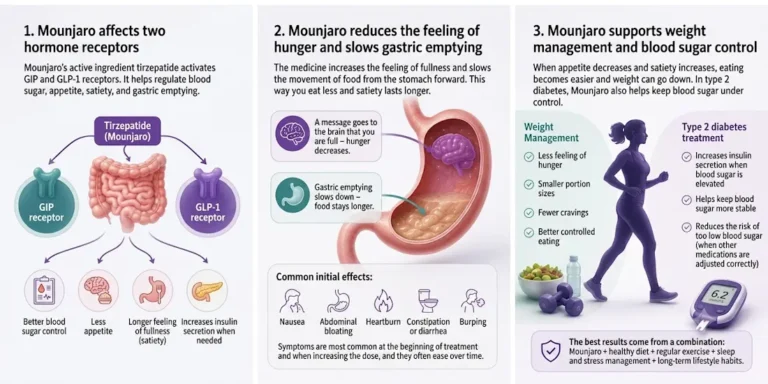
To understand how does Ozempic work, it helps to think about what the body normally does after a meal. Semaglutide mimics the action of GLP-1, a hormone involved in blood sugar control and appetite regulation. It helps the pancreas release insulin when blood sugar rises, lowers the signal for glucagon when it is not needed, and slows stomach emptying. Together, those effects can make glucose levels steadier and help a person feel full sooner.
This is why Ozempic blood sugar effects and appetite effects often show up in the same conversation. Better blood sugar control is the formal goal in type 2 diabetes treatment, but many people also notice that they feel less hungry, snack less often, or feel fuller on smaller meals. That does not mean the medicine does all the work on its own. Food choices, meal timing, hydration, activity, sleep, and other diabetes medicines still matter.
The effect is usually gradual, not immediate. The body often needs time to adjust, which is why dosing starts low. A person may notice early changes in appetite or nausea before they see the fuller benefit on glucose readings, weight trend, or HbA1c. It is usually more helpful to look at progress over weeks to months rather than judging the medicine by the first injection.
Ozempic for type 2 diabetes
Ozempic for type 2 diabetes is usually considered when lifestyle measures alone are not enough, or when a person needs another medicine alongside existing treatment. In day-to-day care, the aim is not just a better lab number. Better glucose control can mean fewer sharp swings during the day, clearer treatment structure, and a lower long-term burden from uncontrolled diabetes.
The medicine may be used on its own in some people, but it is also often combined with other diabetes treatments. Questions about combining it with metformin or insulin are common because combination therapy is part of real clinical practice. The exact plan depends on what a person is already taking, how high their blood sugar is, whether weight change is a priority, and whether low blood sugar is a concern.
This medicine does not treat type 1 diabetes, and it does not suit every adult with type 2 diabetes. Clinicians usually think about kidney function, eye history, stomach symptoms, previous pancreatitis, pregnancy plans, and other risks before deciding whether it is appropriate. That medical screening is one reason self-starting the drug from an unreliable source is not a safe shortcut.
Ozempic and weight loss
Ozempic for weight loss is one of the biggest reasons the medicine draws attention, even though the brand itself may not be the formal weight management product in every setting. The reason weight change happens is not mysterious: semaglutide can reduce appetite, slow gastric emptying, and make it easier for some people to eat smaller amounts without feeling as hungry as before. That can lead to lower calorie intake over time.
Still, Ozempic weight loss is not automatic or identical from person to person. Some people lose a meaningful amount of weight, some lose only a little, and some stop the medicine before they see much benefit because side effects get in the way. A strong result also does not mean a fast result. Slow, steady change is more realistic than dramatic early shifts.
Pictures of before and after Ozempic can make progress look simpler than it really is. Photos rarely show the starting health situation, dose changes, diet history, side effects, or how long the person stayed on treatment. What matters clinically is whether the medicine improves health in a way that feels sustainable, not whether it creates a striking image for social media.
What results can people expect?
Ozempic results usually need to be judged with patience. A person may notice appetite changes early, but the bigger outcomes such as improved blood sugar, a trend in weight, or better routine often take longer. A good early sign is not perfection; it is a pattern of tolerable side effects, better adherence, and gradual progress.
Results also depend on why the medicine was started. Someone using it to support type 2 diabetes management may focus on glucose readings and HbA1c, while someone hoping for weight change may focus more on appetite, satiety, and body measurements. Those goals overlap, but they are not identical. The best outcome is usually a mix of medical improvement and a treatment plan the person can actually continue.
Ozempic side effects and safety
Ozempic side effects are common early in treatment, especially when the dose is increased. Most are digestive. Nausea is probably the best-known example, but constipation, diarrhea, reduced appetite, bloating, reflux, and mild stomach pain can also happen. These problems often improve as the body adjusts, but not always.
A practical way to think about side effects is to separate expected but unpleasant symptoms from warning signs that need review. Mild nausea after a dose increase is not the same as severe vomiting with dehydration. Constipation that improves with fluids and fiber is not the same as severe, persistent abdominal pain. Safety depends on pattern, intensity, and what else is going on in the person's health picture.
Safety discussions also need to include less common but more serious risks. These can include pancreatitis, gallbladder problems, low blood sugar when the medicine is combined with insulin or a sulfonylurea, dehydration-related kidney problems, serious allergic reactions, worsening of diabetic eye disease in some people, and other vision changes that deserve prompt medical advice. If someone already has major digestive problems, pregnancy plans, or a history that raises concern about thyroid C-cell tumor warnings, they need individual review rather than generic internet advice.
Common digestive side effects
Digestive symptoms are the main reason people ask whether the medicine is normal for them. Smaller meals, slower eating, avoiding greasy foods, and paying attention to hydration often help. Severe restriction can backfire: if a person eats too little, drinks too little, or ignores ongoing vomiting, fatigue and weakness may become part of the problem.
Fatigue and a washed-out feeling can happen for several reasons. Some people simply feel worn down from nausea and reduced intake. Others may be adjusting to lower food volume, lower glucose levels, or poor sleep caused by stomach symptoms. Fatigue deserves a closer look if it is intense, persistent, or joined by dizziness, faintness, or signs of dehydration.
When should you contact a doctor quickly?
Get medical advice promptly if symptoms move beyond mild treatment discomfort. These warning signs matter more than whether a side effect sounds common online:
- Severe or persistent abdominal pain, especially if it spreads to the back or comes with vomiting.
- Repeated vomiting, marked weakness, dizziness, or signs of dehydration.
- Yellowing of the skin or eyes, fever with upper abdominal pain, or other signs that may point to gallbladder trouble.
- A major drop in food or fluid intake, severe constipation, blood in the stool, or trouble keeping medicines down.
- Sudden vision changes, severe allergic symptoms, or symptoms of low blood sugar if the medicine is used with insulin or certain other diabetes medicines.
Rare but serious risks
Pancreatitis linked to treatment is rare, but it gets attention for a reason: severe upper abdominal pain, often with nausea and vomiting, should not be brushed off as a routine stomach upset. A person also needs medical review if side effects become so strong that they stop eating, drinking, or taking other important medicines.
Another topic that needs careful explanation is the so-called Ozempic face. This is not an official disease name or a unique drug injury. Usually the term refers to facial volume loss that may become more noticeable after weight loss, especially if it happens relatively quickly. The medicine does not selectively damage the face, but body fat changes can alter appearance, which is why expectations should stay realistic and health-focused.
Ozempic dosage and dose changes
Ozempic dosage is usually increased step by step to make the treatment more tolerable. This matters because many people assume a higher dose is simply better, when in reality the right dose is the one that balances benefit and tolerability. Some adults do well at a lower maintenance dose and do not need to keep climbing.
A common Ozempic dose pathway
Always follow the plan given by the prescriber and your own product instructions, but a common schedule looks like this:
- 0.25 mg once weekly as a starting dose, usually for the first 4 weeks.
- 0.5 mg once weekly after the starting period if the medicine is being tolerated.
- 1 mg once weekly for people who need more effect after time at the lower dose.
- 2 mg once weekly in some treatment plans when more glucose-lowering is needed and the person is tolerating treatment well.
Why the starting dose matters
The starting dose is not meant to show the full treatment effect. It is mainly there to let the body adjust. People sometimes become discouraged when they do not see large early results immediately at 0.25 mg, but that is not a sign the medicine has failed. It often means the treatment is being introduced in the safest practical way.
If a person stops treatment for a while, cannot tolerate a dose increase, or has a period of significant side effects, the next step should come from the prescriber. Restarting at the previous dose on your own can be risky if your stomach has already lost its tolerance.
How to use the Ozempic pen
How to use the pen should always be read from the actual leaflet that comes with the pen, because device details can change. The basic idea is consistent: the injection is given under the skin once weekly, usually in the abdomen, thigh, or upper arm. It should be used on the same day each week if possible, with or without meals.
Where to inject it matters less than using the pen correctly and rotating sites sensibly. Repeatedly using the exact same spot can make the area more irritated or less comfortable. The pen should not be shared with another person, even if the needle is changed, because that creates an infection risk.
The device format can make the medicine feel simple, but it still needs routine. People do best when injection day, food habits, fluid intake, and symptom tracking are all organized in a way that feels realistic. A weekly medicine is easy to forget if the person does not tie it to a calendar cue or a repeated weekly habit.
Ozempic prescription, price, and access
Prescription access should always start with a legitimate medical review. A clinician needs to look at the reason for treatment, other medicines, side-effect risks, and whether the person actually needs it or another option. That is why getting it without a prescription is not just a paperwork issue. It means skipping the part that checks whether the medicine is safe and appropriate.
Cost and price vary widely. Coverage, pharmacy contracts, manufacturer savings programs, pack size, and local supply all affect what someone pays. If a person asks how much it costs, the honest answer is that there is no single universal price. The out-of-pocket amount can be very different from one person to the next.
Buying from unreliable websites is especially risky here. Search results for buying it online often mix legitimate telehealth pathways with unsafe sellers, counterfeit products, and misleading claims. Availability has also been affected at times by supply pressure, which makes it even more important to use licensed channels rather than chasing the fastest offer.
Savings and access questions
Coupon and savings card terms differ by market and by payer rules, so they should be checked through official channels rather than assumed. The same is true when there is no insurance coverage. Some people qualify for savings help, while others may need to compare pharmacies or talk about different medicines altogether.
If someone is told there is a shortage, the next best step is not to order from a random seller. It is to speak with the prescriber or the pharmacy about realistic alternatives, expected timing, and whether the treatment plan should change temporarily.
Ozempic alternatives
Ozempic alternatives depend on the treatment goal. If the main issue is type 2 diabetes control, the alternatives may include other GLP-1 medicines, SGLT2 inhibitors, metformin, or insulin-based strategies. If the main issue is weight management, the comparison may focus more on appetite effect, dose range, and how strongly the medicine has been studied for obesity care.
This is why comparison searches such as Ozempic vs Wegovy, Wegovy vs Ozempic, and comparisons with Mounjaro, Rybelsus, and Trulicity are so common. They sound like brand battles, but the real question is more practical: which option matches the person's diagnosis, goals, tolerability, route preference, and budget?
A practical comparison of common alternatives
| Medicine | How it is taken | Typical reason for comparison | Key point |
|---|---|---|---|
| Ozempic | Weekly injection | Type 2 diabetes; appetite and weight change may also matter | Brand of semaglutide commonly used in diabetes care. |
| Wegovy | Weekly injection | Weight-management comparison | Uses the same active ingredient, semaglutide, but is positioned differently for weight care. |
| Mounjaro | Weekly injection | Broader comparison of glucose and weight effect | Contains tirzepatide rather than semaglutide, so it is not the same drug class experience in practice. |
| Rybelsus | Daily tablet | Injectable vs oral semaglutide | Useful when someone wants semaglutide without an injection, though the routine is different. |
| Trulicity | Weekly injection | Comparison with another GLP-1 medicine | Different active ingredient and device, with a similar broad treatment area. |
What happens after stopping Ozempic?
Stopping the medicine often leads to very ordinary biological changes rather than anything mysterious. Appetite may rise again, the sense of fullness may fade, and previous patterns around food may become harder to manage. If the medicine was helping with blood sugar, glucose control may worsen after stopping unless another treatment or lifestyle change replaces that effect.
What happens when you stop treatment depends on why it was prescribed, how long you were on it, what dose you reached, and what support continues afterward. Some people stop because of side effects, some because of cost, some because of pregnancy planning, and some because the plan changes. Those situations should not be handled in the same way.
If a person has type 2 diabetes, stopping should usually be an active treatment decision rather than a quiet fade-out. There may need to be a replacement plan for blood sugar, a strategy for managing appetite or weight regain, and advice about whether dose re-titration is needed if the medicine is restarted later.
How can Dokport help with Ozempic treatment questions?
Dokport can help when you are unsure whether your medication questions are routine, urgent, or a sign that your treatment plan needs to change. Through chat, a doctor can review your symptoms, current medicines, treatment goal, and the pattern of any side effects in a structured way.
When appropriate for the situation, a doctor can give personalized care guidance, assess whether medication changes might be needed, and guide you to further testing or an in-person visit when that is the safer option.
The aim is not to promise that every question can be solved remotely. It is to make medical support faster, simpler, and safer when you need help deciding what to do next.