
Endometriosis: Symptoms, Diagnosis and Treatment Options
Key points
- Endometriosis is a chronic, benign condition where tissue similar to the uterine lining grows outside the uterus.
- Typical symptoms include severe period pain, pelvic pain, pain during sex, and bowel or bladder symptoms tied to the menstrual cycle.
- Pain intensity doesn't always match the amount of visible disease, so even mild findings can cause severe pain.
- Treatment is individualized and can include pain medication, hormonal therapy, pelvic floor physiotherapy and, in some cases, surgery.
- See a doctor if period pain repeatedly disrupts daily life, continues after bleeding stops, or comes with pain during sex, bowel movements or urination.
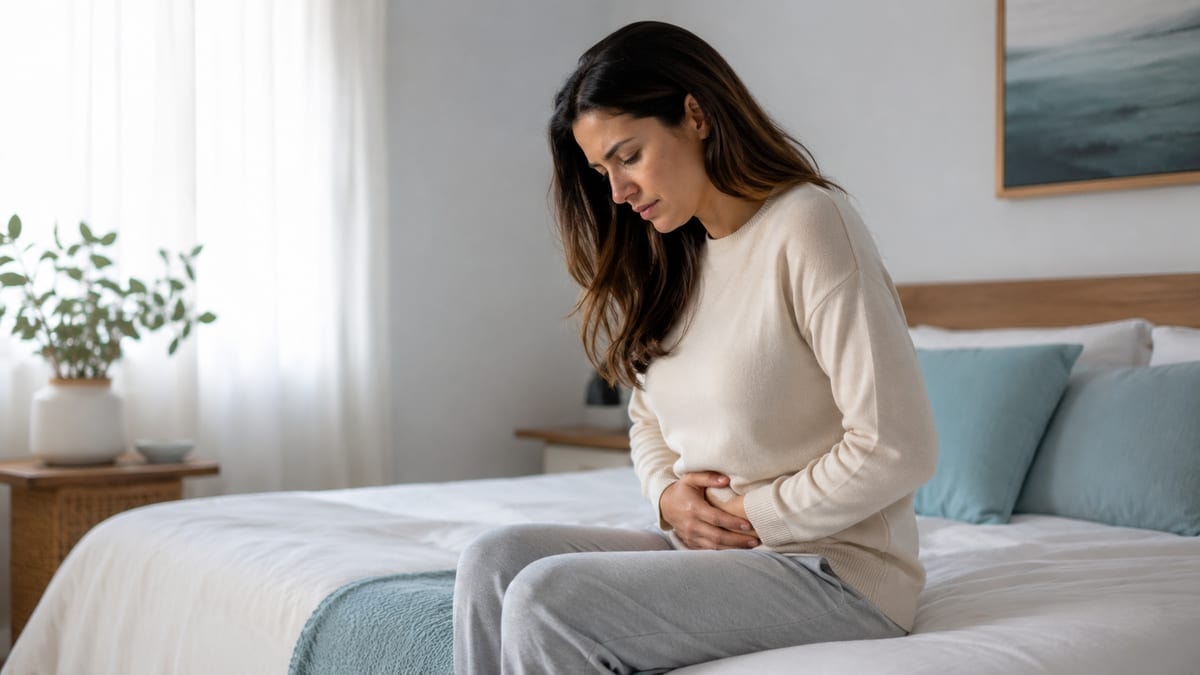
Endometriosis is a long-term condition where tissue similar to the lining of the uterus grows outside the uterus. This tissue can react to hormonal changes during the menstrual cycle and may cause inflammation, scarring and pain. For some people, endometriosis symptoms are mild or come and go. For others, the condition affects work, studies, sex, exercise, sleep, fertility planning and everyday routines.
The most important message is that severe period pain should not be dismissed as something a person simply has to tolerate. Pain that repeatedly disrupts normal life, starts before bleeding begins, continues after the period, or appears with bowel movements, urination or sex deserves a medical assessment. Endometriosis can be difficult to recognize because symptoms vary, examinations may look normal, and pain intensity does not always match the size or visible amount of disease.
This guide explains what endometriosis means, which symptoms can suggest it, how doctors usually investigate it, what treatment options may help, when surgery may be considered, and how to seek support safely. It is written for adults who want practical, medically cautious information without unnecessary alarm.
What is endometriosis?
The condition means that endometrium-like tissue is found outside the uterine cavity. It may appear on the pelvic lining, ovaries, fallopian tubes, the area between the vagina and rectum, the bowel surface, the bladder area or, more rarely, elsewhere in the abdomen. These areas are often called lesions or implants. They are not the same as the normal uterine lining, but they can respond to estrogen and the monthly hormonal cycle.
When this tissue becomes active, it can irritate nearby structures and cause a chronic inflammatory reaction. Over time, inflammation may contribute to adhesions, which are bands of scar-like tissue that can make organs stick to each other. Some people develop endometriomas, sometimes called ovarian “chocolate cysts”, because they contain old blood. Others have deep endometriosis, where disease extends more deeply into tissue and may involve the bowel or bladder area.
It is considered a multifactorial condition. This means there is rarely one simple cause. Heredity appears to play a role, and hormonal, immune and inflammatory factors are also involved. The disease is estrogen-dependent, so symptoms often relate to the menstrual cycle and may ease after menopause, although individual situations vary.
This condition is not a personal failure, and it is not caused by stress, poor diet, sexual activity or lack of exercise. Lifestyle factors may influence how manageable symptoms feel, but they do not explain the condition on their own. A person can do many things “right” and still have endometriosis.
Endometriosis symptoms that should not be ignored
Endometriosis symptoms can be cyclical, meaning they worsen around the period, but they may also become more constant. The typical symptom is pelvic or lower abdominal pain linked to menstruation. The pain may begin days before bleeding, become stronger during the period and sometimes continue after bleeding has stopped. Some people describe cramping, stabbing, pressure, burning, back pain or pain that radiates to the legs.
Pain during sex, especially deep pain, can also be a sign of endometriosis. Pain with bowel movements or urination, particularly when it happens around menstruation, may suggest that endometriosis is affecting areas close to the bowel or bladder. Spotting, irregular bleeding, fatigue, nausea, bloating and bowel changes can occur too, although these symptoms can have many other causes.
- Common signs of endometriosis can include severe period pain, pelvic pain before or during bleeding, pain during or after sex, pain with bowel movements, pain when urinating, heavy or irregular bleeding, bloating, fatigue and difficulty becoming pregnant.
No symptom list can diagnose the condition by itself. Some people with advanced disease have surprisingly few symptoms, while others have intense pain even when visible disease appears limited. The impact on daily life matters. If pain leads to missed obligations, repeated use of strong pain relief, avoidance of sex, sleep disruption or fear of upcoming periods, it is reasonable to ask for help.
Bowel endometriosis, bladder symptoms and pain patterns
Bowel endometriosis can cause symptoms that overlap with common digestive problems. A person may notice pain when passing stool, constipation, diarrhea, bloating, rectal pressure or symptoms that flare predictably around menstruation. Blood in the stool is not something to assume is endometriosis; it needs medical assessment, because several bowel conditions can cause bleeding.
Bladder-related endometriosis may cause pain when urinating, urinary urgency, pelvic pressure or discomfort that worsens during the period. Blood in the urine should also be checked. Many people with pelvic pain have more than one contributing factor, such as endometriosis, irritable bowel symptoms, bladder pain, pelvic floor muscle tension or chronic pain sensitization. This is why a careful symptom history is often more useful than trying to fit every symptom into one label.
Pain may change over time. In the early phase, inflammation may be the dominant driver. With long-lasting pain, the nervous system can become more sensitive, and pain may continue even when the visible disease is treated. This does not mean the pain is imaginary. It means treatment may need to combine hormonal care, pain relief, pelvic physiotherapy, psychological pain-management tools and, in selected cases, surgery.
What causes endometriosis?
The exact cause of endometriosis is not fully known. One theory is that menstrual blood and endometrial cells can move backward through the fallopian tubes into the abdominal cavity, where some cells attach and grow. This process may happen in many people, so it cannot be the whole explanation. Immune, genetic and hormonal factors likely influence why endometriosis develops in some people and not others.
Family history can increase risk. If a close first-degree relative has endometriosis, the likelihood may be higher than average. Estrogen supports the activity of endometriosis lesions, which is why treatments that reduce estrogen effect or suppress periods can help many people. Still, endometriosis is not simply an “estrogen problem”; it is a complex inflammatory disease that can affect nerves, tissues and organs.
There is currently no reliable way to prevent endometriosis from starting. Hormonal contraception and hormone-releasing intrauterine systems may reduce symptoms and may help slow progression in some situations, but they are treatment tools rather than guaranteed prevention. Early attention to severe period pain is useful because untreated recurring pain can become harder to manage over time.
How is endometriosis diagnosed?
Diagnosis usually begins with a careful conversation about symptoms. A doctor may ask when pain starts, how it relates to the menstrual cycle, whether sex, bowel movements or urination are painful, whether bleeding is heavy or irregular, what pain medicines help, and whether pregnancy is being planned. A pain diary can be helpful because it shows patterns that are easy to forget during an appointment.
A pelvic examination may reveal tenderness, reduced mobility of the uterus or painful nodules, but it can also be normal, especially in milder disease. A normal examination does not rule out endometriosis. Ultrasound can detect ovarian endometriomas and some signs of deeper disease, but superficial lesions may not be visible. MRI may be useful when deep endometriosis is suspected or when surgery is being planned.
Laparoscopy, a keyhole operation that allows a surgeon to look inside the abdomen, can confirm endometriosis and assess its extent. However, many doctors no longer use laparoscopy only to make the diagnosis when symptoms are typical and first-line treatment can be started safely. If symptoms improve with appropriate treatment, surgery may not be needed. If pain persists, imaging suggests significant disease, fertility questions are complex or bowel or bladder involvement is suspected, specialist assessment is often appropriate.
There is no simple blood test that reliably diagnoses endometriosis. Some tests may be used to rule out other causes or to assess general health, but they cannot confirm or exclude the condition on their own. A good diagnosis is usually built from symptom history, examination, targeted imaging and, when needed, surgical findings.
Endometriosis stages and why stage does not tell the whole story
Stages are sometimes used after surgical assessment to describe the extent of visible disease. Staging can consider the amount of lesions, scarring, adhesions and ovarian involvement. A higher stage can indicate more extensive anatomical disease, but it does not automatically mean more pain, worse quality of life or poorer treatment response.
This point matters because people sometimes feel confused when they are told their disease is “mild” even though their pain is severe. Pain is shaped by inflammation, nerve sensitivity, lesion location, pelvic floor response, bowel or bladder irritation and the way the nervous system has adapted over time. A person with stage 1 disease can have disabling pain, while another with advanced disease may have fewer symptoms.
For practical care, symptoms and life impact are as important as stage. Treatment should be planned around pain control, bleeding pattern, fertility goals, bowel or bladder symptoms, medication suitability and personal preferences. Staging may help surgical planning, but it should not be used to minimize someone’s experience.
Endometriosis treatment: what usually helps?
Treatment is individualized. The right plan depends on symptoms, age, pregnancy wishes, medication risks, previous treatment, disease location and how much daily life is affected. There is no single permanent cure, but many people can achieve better pain control and a more predictable life with the right combination of care.
Pain relief may include anti-inflammatory medicines such as NSAIDs, often taken at the right time and dose under medical guidance. Paracetamol may be used with other pain strategies in some situations. These medicines can help period pain, but they are not suitable for everyone and should not be relied on indefinitely without assessment, especially if pain is severe or increasing.
Hormonal treatment is often central when pregnancy is not currently being attempted. Combined hormonal contraception, progestin-only pills, continuous progestin treatment, hormone-releasing intrauterine systems and other specialist hormonal medicines can reduce bleeding, suppress cyclical activity and ease pain. Some treatments aim for little or no bleeding, which may reduce stimulation of endometriosis lesions.
When pain has become chronic, treatment may also include pelvic floor physiotherapy, support for sleep and stress, graded activity, neuropathic pain medicines in selected cases and psychological pain-management approaches. These measures are not a substitute for medical treatment of endometriosis, but they can help the nervous system and pelvic muscles recover from long-term pain.
Endometriosis surgery and laparoscopic treatment
Surgery is usually considered when symptoms do not improve enough with medication, when there is a large ovarian endometrioma, when deep disease causes significant bowel or bladder symptoms, or when fertility planning and pain need specialist evaluation. Surgery is most often laparoscopic, meaning it is performed through small incisions using a camera and instruments.
During laparoscopic surgery, visible lesions may be removed or destroyed, adhesions may be treated and endometriomas may be managed. If bowel or bladder involvement is suspected, surgery may require a team with specific expertise, because removing deep disease can be more complex than treating superficial lesions. The aim is to relieve symptoms and preserve function as safely as possible.
Surgery can help many people, but it is not a guaranteed cure. Endometriosis can recur, and repeated operations, especially on the ovaries, may carry risks for fertility and ovarian reserve. After surgery, hormonal treatment may be recommended when pregnancy is not being attempted, because it can reduce the risk of symptoms returning. The decision should balance expected benefit, surgical risk, fertility goals and quality of life.
Endometriosis and pregnancy
The condition can be associated with difficulty becoming pregnant, but it does not mean pregnancy is impossible. Some people conceive naturally, while others need fertility assessment or assisted reproduction. The effect on fertility depends on factors such as ovarian endometriomas, adhesions, inflammation, age, sperm factors and whether fallopian tubes and ovaries are functioning well.
Hormonal treatments used for pain control usually prevent pregnancy while they are being taken, so they are not used when someone is actively trying to conceive. If pregnancy is a near-term goal, care often focuses on fertility evaluation, timing, pain management that is compatible with trying to conceive and specialist guidance. Surgery may sometimes improve chances, but it is not automatically the first choice for every person.
Pregnancy may reduce symptoms for some people during that period, but it should not be presented as a treatment. Symptoms may return after pregnancy and breastfeeding, and some people still have pain. Anyone with endometriosis who is planning pregnancy, struggling to conceive or worried about medication should discuss goals early so the treatment plan matches the life plan.
Endometriosis diet, self-care and daily coping
There is no specific endometriosis diet that cures the condition. However, eating in a way that supports general health, energy and digestion may make symptoms easier to manage. Some people notice less bloating or bowel discomfort when they reduce foods that trigger their own digestive symptoms. Others benefit from regular meals, enough protein, high-fiber foods, vegetables, healthy fats and limiting excess sugar or alcohol.
Self-care is most useful when it supports medical care rather than replacing it. Heat packs, gentle movement, rest during severe pain, pacing, sleep routines and pelvic relaxation exercises may help some people. Keeping a symptom diary can identify patterns and make appointments more productive. It can also show whether a treatment is helping over several cycles.
- Helpful information to track includes pain days, bleeding days, bowel and bladder symptoms, pain during sex, medicines used, missed work or study, sleep disruption, side effects, and whether symptoms occur before, during or after bleeding.
Be cautious with expensive supplements, restrictive diets or programs that promise to “reverse” endometriosis. A balanced approach is safer: use lifestyle changes to support wellbeing, and use medical care to assess pain, bleeding, fertility goals and possible complications.
Adenomyosis vs endometriosis
Adenomyosis and endometriosis are related in the sense that both involve tissue similar to the uterine lining and both can cause painful periods. They are not the same condition. In adenomyosis, endometrium-like tissue is found within the muscular wall of the uterus. In endometriosis, endometrium-like tissue is outside the uterine cavity, often in the pelvis or ovaries.
Symptoms can overlap. Both conditions may cause period pain, pelvic pain and heavy or difficult bleeding patterns. Adenomyosis is often associated with an enlarged, tender uterus and heavy bleeding, while endometriosis is more often linked with pain during sex, bowel or bladder pain around periods and ovarian endometriomas. Some people have both, which can complicate diagnosis and treatment.
Because symptoms overlap with fibroids, ovarian cysts, pelvic inflammatory disease, irritable bowel syndrome, urinary conditions and chronic pelvic pain, self-diagnosis is risky. A clinician can use history, examination and imaging to narrow down the likely causes and choose treatment that fits the situation.
When should you seek medical help for endometriosis symptoms?
Medical help is appropriate when period pain is severe, pain medicines do not work well enough, pelvic pain is recurring, sex is painful, bowel movements or urination hurt around periods, bleeding is very heavy or irregular, or pregnancy has not occurred after a reasonable period of trying. It is also reasonable to seek help if symptoms are causing anxiety, avoidance, fatigue or repeated disruption to normal life.
Urgent assessment is needed for sudden severe abdominal pain, fainting, fever, heavy bleeding with weakness, suspected pregnancy with severe pain, blood in urine or stool, new severe pelvic pain, or symptoms that feel very different from the usual pattern. These symptoms may be unrelated to endometriosis and can require prompt in-person evaluation.
For non-urgent but persistent symptoms, starting with a general medical appointment is often enough. A doctor can assess the pattern, start first-line treatment when suitable, arrange imaging if needed and refer to specialist care if symptoms are difficult, complex or not improving.
How can Dokport help with endometriosis?
Dokport can offer access to a remote doctor without a traditional appointment booking process. If you have period pain, pelvic pain, suspected endometriosis symptoms, medication questions or uncertainty about whether you need further care, a doctor can assess your situation through chat and help you decide sensible next steps.
A remote doctor can give personalized care guidance, discuss pain relief options, review whether symptoms fit a pattern that should be investigated, and help you understand when in-person examination, imaging or specialist referral may be needed. Medication or sick leave may be prescribed when appropriate for the situation, but this is never something that can be promised in advance.
Remote care is especially useful for getting timely advice, documenting symptoms and avoiding unnecessary delay. It is not a replacement for emergency care, pelvic examination, ultrasound, MRI or surgery when those are needed. The goal is fast, easy and safe access to medical support, with clear guidance on whether remote care is enough or whether further testing or an in-person visit is safer.
Living with endometriosis over time
The condition often requires long-term thinking. A treatment that works well at one life stage may need to change when pregnancy becomes a goal, side effects appear, symptoms shift or surgery is being considered. Follow-up matters because the condition can affect pain, fertility, mental wellbeing, relationships and work capacity.
It can help to prepare for appointments with concrete examples: how many days per month pain occurs, what it prevents you from doing, which medicines you have tried, whether symptoms are cyclical, and whether bowel, bladder or sexual pain is present. Specific information makes it easier for a doctor to judge whether the current plan is enough or whether further assessment is needed.
Support should be practical and respectful. Endometriosis is real, common and treatable, but it can take time to find the right combination of care. A good plan should reduce pain where possible, protect fertility goals where relevant, avoid unnecessary procedures, recognize chronic pain mechanisms and keep the person’s everyday life at the center of care.

Need a doctor?
Describe your symptoms in a remote appointment — a doctor assesses your situation 24/7.
Frequently asked questions
What is endometriosis in simple terms?
What are the most common endometriosis symptoms?
Can endometriosis cause bowel symptoms?
How is endometriosis diagnosed?
Is there an endometriosis test?
Can ultrasound show endometriosis?
What is endometriosis treatment?
Does endometriosis surgery cure the condition?
What is laparoscopic surgery for endometriosis?
Can endometriosis affect pregnancy?
Is endometriosis cancer?
Does endometriosis shorten life expectancy?
Can diet cure endometriosis?
What is the difference between adenomyosis and endometriosis?
When should I see a doctor for suspected endometriosis?
Can remote care help with suspected endometriosis?
Read also
- Why Do You Gain Weight During Menopause — and What Can You Do About It?
- Urinary Tract Infection (UTI): Symptoms, Causes and Treatment
- Abdominal Pain: Common Causes, Relief, and When to Seek Help
- Chlamydia: Symptoms, Testing and Treatment
- Cough: causes, symptoms, self-care and when to seek help
- Gout: Symptoms, Causes and When to See a Doctor