Finland? Get service
 Shingles
Symptoms, rash, treatment, recovery, and when to seek care
What is shingles?
Shingles is a painful viral infection that happens when the varicella zoster virus becomes active again after staying quiet in the body for years. This is the same virus that causes chickenpox. After chickenpox has healed, the virus can remain in nerve tissue and later travel along a nerve to the skin, where it causes pain, burning, tingling, and a blistering rash on one side of the body.
Many adults first ask a simple question: what is shingles, and why would it appear long after childhood illness seems to be over? The short answer is that the virus never fully leaves the body after chickenpox. Instead, it stays dormant and may reactivate later, especially as the immune system changes with age or because of illness, cancer treatment, transplant medicines, or other factors that weaken normal immune defenses.
Shingles is not just a skin problem. The rash is visible, but the infection involves a nerve. That is why the pain can start before the skin changes appear and why some people continue to feel nerve pain even after the rash has healed. In many cases, the course is limited and the skin improves over a few weeks, but the discomfort can still be significant and sometimes prolonged.
A typical episode affects a narrow strip of skin supplied by one nerve. The rash usually stays on one side of the chest, back, abdomen, face, or less often an arm or leg. That one-sided pattern is a useful clue. If a rash crosses the midline widely or looks very different from small grouped blisters, another diagnosis may need to be considered.
Who gets shingles and why does it happen?
Anyone who has had chickenpox can get shingles later in life. Risk rises with age, and it also rises in people whose immune system is under strain. That does not mean every younger adult with shingles has a serious hidden disease. In many cases no alarming underlying cause is found, but age, immune status, and overall health still matter when a doctor evaluates the situation.
Shingles can happen only once, but recurrence is possible. A past episode does not guarantee lifelong protection. Some people are surprised by this because they assume a painful illness of this kind could not come back. In reality, the virus can reactivate again, which is one reason prevention and vaccination may still be part of the discussion after recovery.
Stress alone is not considered a complete explanation, although people often notice that shingles appears during periods of exhaustion, poor sleep, or other strain. It is more accurate to think of shingles as the result of virus reactivation when the body’s control over the virus is less effective than before.
Shingles symptoms and early signs
Shingles symptoms often begin before the rash appears. The earliest signs are commonly burning, stinging, tingling, itching, tenderness, or pain in a limited area of skin. For some people this feels like sunburn, for others like a pulled muscle, electric pain, or skin that suddenly becomes sensitive to light touch. These early symptoms may begin one to several days before visible blisters develop.
Because the first stage can be mostly pain without a clear rash, shingles is sometimes mistaken for another problem. Chest pain may be confused with a heart or rib problem. Facial pain may be mistaken for dental trouble, sinus pain, or migraine. Back or flank pain may seem muscular at first. When a one-sided rash follows soon after, the picture becomes more typical.
Common shingles symptoms include pain, burning, tingling, redness, a cluster of fluid-filled blisters, and skin sensitivity. Some people also feel tired, mildly feverish, or generally unwell. The pain can range from mild irritation to severe nerve pain that interferes with sleep, clothing, movement, or concentration.
An important practical point is that pain may come first. If a person has strong one-sided pain and then a blistering rash appears in the same area, shingles becomes much more likely. In rarer cases, shingles can cause nerve pain with little or no obvious rash. That can make diagnosis harder and is one reason medical review is sometimes needed even if the skin changes are subtle.
What does a shingles rash look like?
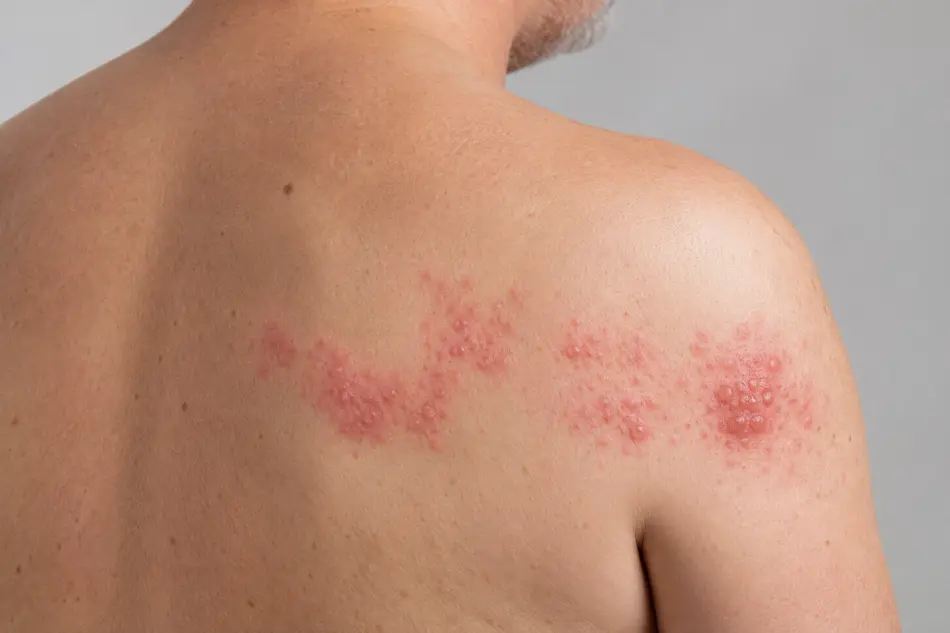
A shingles rash usually starts as a red or pink patch on one side of the body and then develops into small clear blisters. These blisters often appear in clusters rather than as isolated spots. Over the next days they can become cloudy, break, crust over, and then slowly heal. This is why people often ask what does shingles look like: the appearance changes over time rather than staying the same from day one to day ten.
The most typical shingles rash follows a narrow band or patch linked to a single nerve pathway. Many people notice it on the chest or back, but the face is another common area. The rash is usually one-sided and does not spread randomly across the whole body. If it involves the forehead, the tip of the nose, or the area around one eye, the risk of eye complications is higher and urgent assessment is needed.
In the earliest phase, a shingles rash may look like a few tiny blisters on a red base. Later the blisters can increase in number and then form scabs. Some people search for pictures of shingles because they want to compare their skin to an online image, but appearance alone does not always settle the diagnosis. Other rashes, cold sore infections, contact dermatitis, insect bites, or impetigo can sometimes look similar.
There is no single perfect visual description for every case. Mild early shingles may have only a few blisters. More extensive cases can involve dozens or even hundreds. In some people the rash heals without visible scarring. In others, especially if the skin becomes secondarily infected or heavily scratched, healing can take longer and leave temporary color changes.
How long does shingles last?
A common concern is how long shingles lasts. The skin rash often changes over a period of two to four weeks, although some sources describe complete skin healing taking up to four to six weeks in certain cases. The earliest pain may start before the rash, the blisters usually evolve over several days, and the scabs then dry and fall away gradually.
The rash itself is only one part of recovery. Pain can continue after the skin looks much better. Some people feel irritation for days, some for weeks, and some develop longer-lasting nerve pain called postherpetic neuralgia. This becomes more common with increasing age and is one reason prompt assessment can matter, especially in older adults and in those with strong pain or facial involvement.
If someone asks how long can a shingles rash last, the honest answer is that the visible phase is often measured in weeks rather than days. Claims about curing shingles in three days are misleading. Early treatment may shorten symptoms and reduce pain, but it does not instantly erase the infection.
Is shingles contagious or spreadable?
One of the biggest questions people have is whether shingles is contagious. Shingles does not spread from one person to another in the same way that a cold or flu spreads. You cannot catch shingles itself from another person. However, the fluid in the blisters contains active varicella zoster virus, so direct contact with the rash can transmit the virus to someone who has never had chickenpox or has not been protected against it. In that situation, the exposed person would develop chickenpox, not shingles.
So is shingles spreadable or transmissible? In a limited sense, yes, but mainly through contact with the blister fluid while the rash is active. The risk drops after the blisters dry and crust over. Covering the rash, avoiding scratching, washing hands, and avoiding direct skin contact with vulnerable people are sensible precautions.
People who are pregnant, severely immunocompromised, newborn, or known not to have protection against chickenpox deserve extra caution around an uncovered active rash. For most day-to-day casual contact, the risk is not the same as with a highly airborne illness. Still, if the rash is widespread, if the immune system is severely weakened, or if the diagnosis is uncertain, a clinician may give more specific advice about contact precautions.
Shingles treatment: what helps and what does not
Shingles treatment depends on timing, severity, location of the rash, the person’s age, and immune status. Antiviral medicines are most useful early in the course, especially when started within the first days after the rash begins. These medicines do not make shingles vanish overnight, but they can shorten the illness, reduce active symptoms, and lower the intensity of early pain in many cases.
Doctors may use antiviral treatment such as aciclovir, valaciclovir, or famciclovir. A typical course is about one week, although the exact choice and timing depend on the clinical situation. Antiviral treatment is especially important when the rash involves the face or eye area, when the pain is severe, when the rash is extensive, when the person is older, or when the immune system is weakened.
Pain control matters just as much as the antiviral decision. Simple pain relief such as paracetamol or an anti-inflammatory medicine may be enough for some people. Others need stronger prescription pain treatment, especially if nerve pain is intense. In selected cases a clinician may use medicines that are commonly prescribed for nerve pain rather than for ordinary inflammation.
Home care is still part of shingles treatment. Keeping the area clean and dry, protecting the skin from friction, and resting when pain is tiring can all help. Thick creams, strong topical products, or random internet remedies are usually less helpful than people hope. Scratching or picking at blisters may irritate the skin further and can increase the chance of secondary bacterial infection.
A realistic approach is important. There is no proven way to cure shingles in a few days. Good care can improve comfort, lower risk in some groups, and support healing, but the body still needs time to recover from the infection and the irritated nerve.
What can you do at home?
Mild shingles can sometimes be managed at home after a clinician has confirmed the diagnosis or when the symptoms are clearly improving and there are no warning signs. Rest, loose clothing, gentle skin care, and regular pain relief are often more useful than complicated routines. A dry dressing may help protect tender skin if clothing rubs against the blisters.
If the pain is keeping you awake, worsening quickly, or making normal daily tasks hard, it is worth seeking medical advice rather than trying to push through it. The same applies if the rash is close to the eye, inside the mouth, around the ear, or is spreading widely. Home care works best when the case is mild and the person knows what warning signs to watch for.
Complications of shingles
The best-known complication is postherpetic neuralgia, meaning pain that continues after the rash itself has healed. This pain may feel burning, stabbing, shocking, or extremely sensitive to touch. Older adults are more likely to have it, but it can happen at other ages as well. The longer the pain lasts, the more it can affect sleep, mood, and normal functioning.
Eye involvement is another important complication. Shingles affecting the forehead, eyelid, or nose can also affect the eye and threaten vision if not treated promptly. Facial shingles may also involve the mouth, ear, or throat depending on which nerves are affected.
Less often, the rash becomes secondarily infected with bacteria. People with significant immune suppression can develop more extensive or severe disease. Rare but serious complications can involve the nervous system, including severe headache with meningitis-like illness. These are not everyday outcomes, but they are part of why severe pain, severe headache, eye symptoms, or a widespread rash should never be ignored.
When should you seek medical care?
Not every mild case requires urgent care, but shingles should not be brushed off when the pain is severe, the rash is on the face, or the immune system is weakened. The earlier a clinician reviews a suitable case, the more likely it is that antiviral treatment can still be started during the window when it helps most.
Seek medical assessment promptly if any of the following applies:
- the rash is on the forehead, around the eye, on the nose, or vision changes appear
- the pain is strong, rapidly worsening, or difficult to control with simple pain relief
- the rash is widespread, unusual, or the diagnosis is uncertain
- you are pregnant, immunocompromised, receiving cancer treatment, or have had an organ or stem cell transplant
- you have a high fever, marked weakness, severe headache, confusion, or signs of bacterial skin infection
- the rash affects the ear, mouth, or swallowing becomes painful
Shingles vaccine and prevention
A shingles vaccine can reduce the risk of shingles and lower the chance of long-lasting nerve pain after shingles. Vaccination is usually discussed more often with older adults and with some people whose immune system puts them at higher risk, depending on local recommendations and personal medical history. The goal is prevention, not treatment of an active rash.
The shingles vaccine does not replace good evaluation when symptoms have already started. If you develop pain and a blistering rash, it is still the current illness that needs attention. Vaccination becomes relevant as a future prevention conversation after acute care questions have been addressed.
People also ask about shingles vaccine side effects. Like many vaccines, it can cause short-term soreness, fatigue, muscle aches, or feverish feelings, but a clinician can help weigh expected reactions against the benefit of reducing the risk of a painful nerve infection and its complications. The right choice depends on age, health status, immune system factors, and the vaccine options available.
How can Dokport help with shingles?
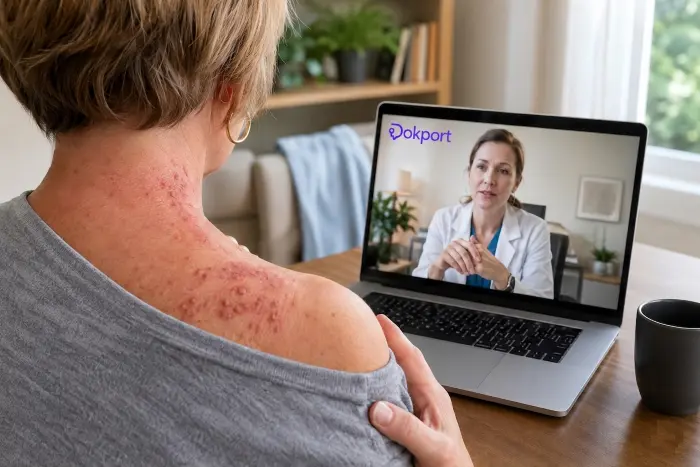
If you think you may have shingles, a remote doctor can review your symptoms through chat, ask when the pain and rash started, and assess whether the pattern sounds typical or whether you may need in-person care. This can help you decide how urgent the situation is, especially when you are unsure whether a one-sided painful rash needs same-day attention.
A doctor can give personalized care guidance, discuss pain relief, and consider whether antiviral treatment or other prescription treatment might be appropriate for your situation. When needed, you can be directed to further testing or an in-person examination, particularly if the eye area is involved, the rash is extensive, or the diagnosis is uncertain.
The bottom line on shingles
Shingles is a reactivation of the chickenpox virus that causes nerve pain and a typically one-sided blistering rash. Early symptoms may start before the rash, treatment works best early in suitable cases, and recovery often takes weeks rather than days. While many episodes remain limited, pain, eye involvement, or immune suppression can raise the stakes and justify quicker medical review.
A careful, calm approach works best: recognize the pattern, protect the rash, avoid assuming every internet remedy will help, and seek care when the location, severity, or your general health makes the situation less straightforward. That balance between practical self-care and timely medical assessment is usually the safest way through shingles.