

Hemorrhoids: Symptoms, Medical Care, and When to See a Doctor
Key points
- Hemorrhoids are swollen blood vessel cushions in the anal area; internal ones usually cause painless bleeding, while external ones are more prone to pain and itching.
- Most mild-to-moderate cases ease within about two weeks with fibre, fluids, gentle cleansing, warm sitz baths, and avoiding straining.
- A sudden, very painful lump usually means a thrombosed external hemorrhoid — not dangerous, but often intensely uncomfortable for a few days.
- Persistent symptoms, recurring or first-time bleeding, or a swelling that no longer retracts are reasons to book a doctor's assessment; heavy bleeding, severe pain, fever, or spreading redness call for urgent care.
- When home care isn't enough, treatment typically progresses from conservative bowel-habit management to rubber band ligation and, in advanced cases, surgery.
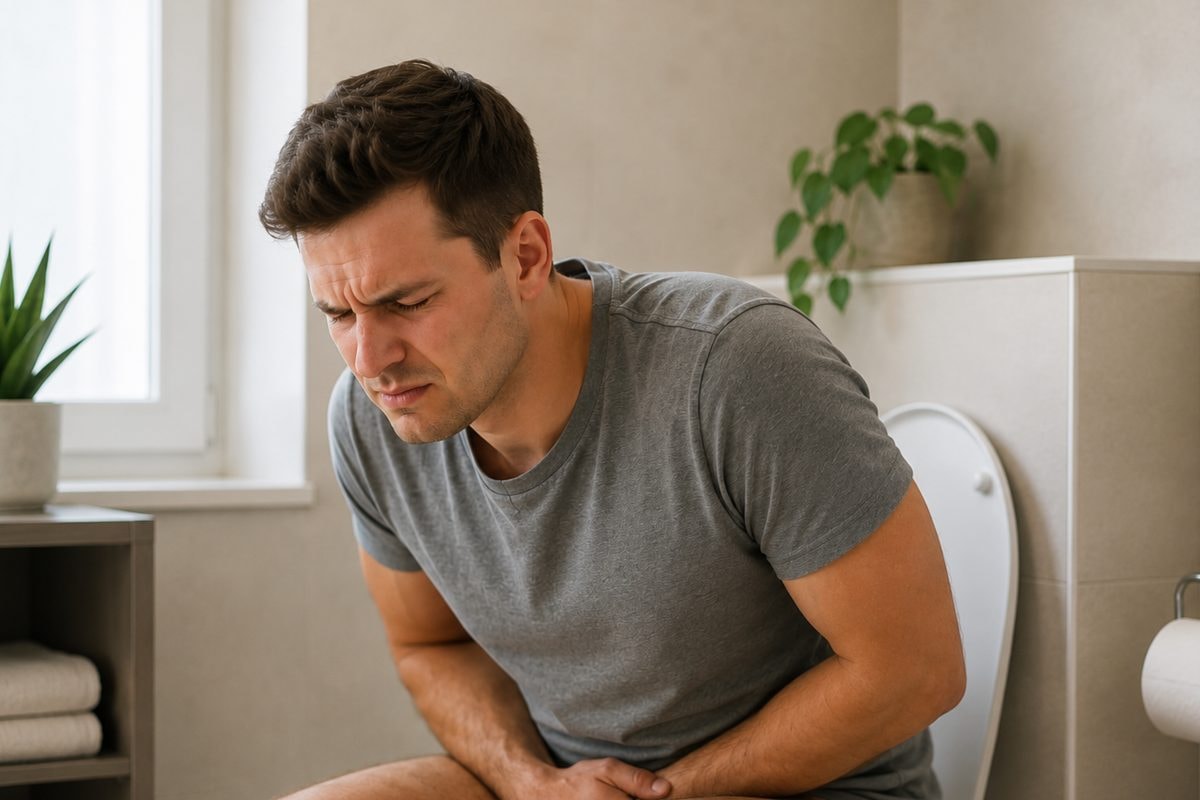
Hemorrhoids are one of the most common problems affecting the anal area, and almost everyone experiences related symptoms at some point in life. The term describes swollen blood vessel cushions in the lower rectum and around the anus that can become irritated, swell, or bleed. Hemorrhoids are usually harmless, though they can still feel embarrassing and even a little frightening, especially the first time symptoms appear. This article explains what causes hemorrhoids, what they look and feel like, how to ease them at home, and when it's worth arranging a doctor's assessment.
What Are Hemorrhoids?
The anal canal naturally contains soft, blood-vessel-rich tissue that helps the anus close tightly and helps you sense whether the rectum contains gas or stool. When this tissue stretches, loosens, or swells more than usual, hemorrhoids develop. In other words, this is an exaggeration of a completely normal structure, not a foreign growth or an infection in the strict sense — although the tissue can become irritated and inflamed with repeated use. In everyday conversation people often shorten this to "piles," and the two words describe exactly the same problem.
Hemorrhoids are grouped by location into two main types: internal and external. The internal type sits under the lining of the rectum, deeper inside the canal, and lacks the same pain-sensing nerves found further out — which is why internal hemorrhoids most often show up as painless bleeding. External hemorrhoids, on the other hand, sit at the outer edge of the anus, under the skin, where nerve sensitivity is much higher. That's why the external form is more likely to cause pain, itching, and swelling than the internal one. Some people experience both types at the same time, in which case the picture usually includes both pain and bleeding.
Doctors often describe severity on a scale of one to four, based on how far an internal hemorrhoid protrudes from the anus. In its mildest form it never becomes visible, even after a bowel movement. In the second and third grades it bulges out but then draws back in, either on its own or when pushed back gently by hand. In the most advanced, fourth grade, it stays permanently outside and no longer retracts by itself. Knowing this scale helps explain why two people can describe what sounds like the same problem in very different ways — and why treatment is always chosen individually, based on grade and symptoms rather than a one-size-fits-all approach.
What Causes Hemorrhoids?
Hemorrhoids usually develop because of sustained pressure on the blood vessels around the anus. The most common contributing factors include:
- constipation and hard stools that require straining to pass
- long periods sitting on the toilet, for example while scrolling a phone
- pregnancy and childbirth, which increase pressure in the pelvic area
- being overweight
- long stretches of sedentary work or too little movement generally
- repeatedly lifting heavy objects
- diarrhoea, which irritates the area repeatedly
Heredity may also play a role, since some people simply have blood vessels that stretch more easily than others, which helps explain why the problem often runs in families. Age is linked to hemorrhoids too, because the supporting tissue in the area gradually weakens over the years — which is why the problem becomes more common with age, even though it can appear at any life stage. During pregnancy, the growing uterus and hormonal changes add pressure to the veins in the pelvic floor, which is why symptoms are common for expectant mothers, particularly in late pregnancy and after delivery. None of these causes mean the problem is unusual or something to feel ashamed of — it reflects very ordinary wear on the body's structures and a gradual build-up of pressure over time.
Hemorrhoids affect women and men in roughly equal measure, and it's one of the most common reasons adults seek a doctor's assessment for symptoms in the anal area. Many people notice their first symptoms somewhere between their thirties and fifties, once desk-bound work, a busy schedule, and an irregular diet start to place a combined strain on bowel function. For some there's a clear trigger — a long flight, a sudden change in diet, or a heavy physical effort — while for others symptoms build up gradually with no single identifiable cause. Either way, the underlying mechanism is the same: pressure in the blood vessels around the anus grows larger than the tissue can comfortably absorb.
Hemorrhoid Symptoms: What They Look and Feel Like
Many people wonder what hemorrhoids actually look like and how to tell them apart from other problems in the same area. An external hemorrhoid often appears as a soft, rounded bulge at the edge of the anus — it may be skin-coloured or slightly darker, and can range in size from a pea to a small grape. The internal type, by contrast, usually isn't visible at all unless it has prolapsed outward during a bowel movement.
Typical hemorrhoid symptoms include:
- bright red blood on toilet paper or in the toilet bowl after a bowel movement
- itching or irritation around the anus
- a sense that the bowel hasn't fully emptied
- mild mucus discharge, which can be a hygiene nuisance
- a lump that can be felt with a finger at the edge of the anus
- pain or tenderness, especially with the external type
Bleeding hemorrhoids are a common but still noteworthy symptom worth paying attention to. The bleeding is usually bright red and light, and it happens right around the time of a bowel movement — the colour tells you the blood is coming from low in the digestive tract, near the anus, rather than higher up. That said, bleeding from this area can occasionally have other causes, so any new or changed bleeding pattern is always worth having checked, simply to rule out anything else.
A genuinely painful sensation can be a sign that a clot has formed inside the hemorrhoid — in other words, that it has become thrombosed. In that case, a hard, intensely painful lump appears at the edge of the anus quickly, often within a few hours or a day. The pain is typically worst in the first few days and eases gradually over the following couple of weeks as the swelling goes down. A thrombosed hemorrhoid isn't dangerous, but it can be painful enough to make sitting and everyday movement genuinely difficult for a few days.
A Closer Look at External Swelling and Thrombosis
External hemorrhoids deserve a closer look, because their symptoms differ from the internal form. Since the area is richly supplied with nerves, it can feel tender even at an early stage of swelling, and itching is common as the skin stretches. Appearance varies: it can be smooth and soft, or, if it has lingered for a while, it may leave behind a loose fold of skin — a so-called skin tag — even after the swelling itself has gone down. Skin tags don't bleed or hurt on their own, but they can make the area harder to keep clean and feel like a nuisance day to day.
Thrombosis describes a clot that has formed inside an external hemorrhoid. It feels harder and more tender than usual, and the colour can look bluish or dark red because of the clot visible beneath the skin. Most thrombosed cases settle on their own within a couple of weeks without any procedure, but if the pain is severe and the clot is fresh — under two or three days old — a doctor can sometimes remove it under local anaesthetic in a short procedure, which relieves the pain quickly. Later on, the same procedure offers little benefit, since the swelling has already begun to subside on its own, so home care and time become the more sensible path at that point.
Easing Symptoms at Home
Most mild to moderate hemorrhoid symptoms respond well to home care, provided the stool stays soft and bowel habits become regular. Avoiding constipation and straining is the cornerstone of home treatment, since straining is exactly what keeps pressure on the blood vessels around the anus and makes symptoms worse.
In practice, home care typically includes:
- a fibre-rich diet — whole grains, legumes, vegetables and fruit — to soften stool
- drinking enough fluid throughout the day, since fibre without water can actually worsen constipation
- regular, moderate exercise, which supports bowel function and circulation in the pelvic area
- shortening toilet visits and avoiding straining — leaving the phone out of the bathroom helps more than people expect
- careful but gentle cleansing of the area, for example with lukewarm water instead of rubbing with dry paper
- a warm sitz bath a few times a day, which can relax the area and ease pain and itching
Over-the-counter creams and suppositories can be worth trying for temporary symptom relief. They can feel soothing and calm irritation, even though there isn't strong evidence that they speed healing as a treatment in their own right — it's more useful to think of them as symptomatic support rather than a cure. No over-the-counter remedy replaces regulating bowel function, which remains the real foundation of treatment. If pain is significant, a standard pain reliever can help in the short term, but it's worth using cautiously and according to the package instructions.
It also helps to pay attention to toilet posture: raising your feet slightly, for instance with a small footstool, can straighten the angle of the rectum and reduce the need to strain. An unhurried but not overly long toilet visit, without extra time spent sitting, supports the same goal. In most cases, mild symptoms — including a painful-feeling external swelling — settle within a couple of weeks with home care. If symptoms don't ease in that time, or they get worse, it's a good idea to get them assessed.
When to See a Doctor
It helps to think about seeking care in three tiers, depending on how urgent the situation is.
The first tier covers mild symptoms you can simply monitor at home: an occasional light streak of blood on toilet paper, mild itching, or a small, painless swelling that disappears on its own within a few days alongside home care. In these situations, monitoring the symptoms together with the home care described above is usually enough, and there's no need to see a doctor right away.
The second tier covers situations where it's worth booking an appointment, even though it isn't an emergency: symptoms persist for weeks despite home care, bleeding recurs more often than occasionally, a swelling no longer draws back in on its own after a bowel movement, or the problem is clearly affecting daily life, sleep, or sitting comfort. An assessment is also worthwhile the first time bleeding appears without a previously identified cause — not because it's likely to be something other than hemorrhoids, but so any other possible cause can be reliably ruled out.
The third tier covers symptoms that call for urgent assessment:
- heavy or continuous bleeding
- significant dizziness or unusual fatigue alongside bleeding
- sudden, very severe pain
- a high fever together with pain in the anal area
- spreading redness and warmth in the area, which can point to infection
In these situations, it's worth seeking urgent or emergency assessment without delay. Needing urgent care doesn't automatically mean the situation is serious — it means the issue is worth sorting out quickly, so the right treatment can start in time and any uncertainty can be resolved.
How Doctors Evaluate and Treat the Condition
A doctor typically starts by asking about how long symptoms have lasted, bowel habits, and any past problems, followed by a physical examination of the area. If needed, the inside of the rectum is examined with a finger or a small scope, to see the location and grade of the swelling and to rule out other possible causes for the symptoms, such as anal fissures or other changes to the lining. For new bleeding, a doctor may also consider a broader bowel examination if warranted by factors like age, family history, or other symptoms — an important part of safe care, even though the cause usually turns out to be a straightforward case of hemorrhoids.
Treatment usually progresses in steps according to symptoms and size. First-line treatment is nearly always the conservative approach described above — regulating bowel function — because most symptoms improve with this alone, without any further procedure.
If symptoms, particularly recurring bleeding, continue despite conservative care, the most common next step is rubber band ligation. A small rubber band is placed around the base of the swelling, cutting off its blood supply; the tissue then shrinks and falls away on its own within a few days. The procedure is usually done in the office without sedation, is relatively quick, and may need to be repeated if there is more than one area to treat. Rubber band ligation works best for smaller, bleeding internal hemorrhoids that still draw back into the canal on their own.
Less often, when other treatments haven't helped or the problem is very advanced, surgery may be considered. There are a few options: traditional surgical removal takes out the tissue completely, which is the most effective method but requires the longest recovery — several weeks — and can be quite painful at first. Alternatively, a procedure that ties off the blood vessels supplying the area without removing tissue offers a faster recovery, though symptoms are somewhat more likely to come back. Skin tags left around the anus can also be removed with a small procedure if needed, although they don't require treatment on their own unless they cause a clear hygiene problem. A doctor helps choose the right option based on how severe the symptoms are and the patient's broader life situation.
How Can Dokport Help with Hemorrhoids?
If symptoms are on your mind, or the problem doesn't seem to be easing despite home care, Dokport makes it possible to reach a doctor remotely without a traditional booking process. A doctor can assess your symptoms through chat — for example, whether they sound like a typical case of hemorrhoids or whether it's worth investigating further — and give you personalised guidance on home care and monitoring your symptoms.
Where the situation calls for it, the doctor may prescribe symptom-relief medication if that's appropriate based on the assessment, and may direct you to further tests or an in-person visit — for example, when treatment such as rubber band ligation or another procedure is needed that can't be done remotely. The goal is to offer a fast, easy and safe first step when symptoms are on your mind but the idea of an in-person appointment feels like a high bar. Remote care doesn't replace situations that need a hands-on examination or procedure, and the doctor will tell you honestly when an in-person visit is the right next step.
Looking After Yourself Going Forward
Hemorrhoids tend to come back if bowel habits and lifestyle aren't addressed over the longer term. Fibre, adequate fluids, exercise, and avoiding straining form the foundation of both treatment and prevention — they lower the odds of symptoms returning once treated. Managing weight and breaking up long stretches of sitting also matter, particularly in desk-based jobs, where a lack of breaks keeps pressure on the pelvic blood vessels throughout the working day.
Hemorrhoids are not a sign of poor health, and there's nothing to be embarrassed about — this is an extremely common problem that touches a large share of the adult population at some point in life. Most symptoms are mild and ease with home care, but it's useful to know the point at which an assessment is worth seeking: symptoms that drag on or worsen, bleeding that appears for the first time, or sudden, severe pain and other signs that suggest urgency. Keeping an eye on those signals means you can trust that the problem will be treated at the right time and in the right way, whether that turns out to be simple home care or a doctor's procedure.
Many people hesitate to bring this up because the topic feels personal or awkward. Healthcare professionals encounter this symptom constantly, though, and mentioning it takes no more courage than raising any other health concern. The sooner symptoms are addressed — whether through home care alone or, when needed, a doctor's assessment — the sooner everyday life gets back to normal without unnecessary worry.

Need a doctor?
Describe your symptoms in a remote appointment — a doctor assesses your situation 24/7.
Frequently asked questions
What usually causes hemorrhoids?
What do hemorrhoids look like?
What's the difference between internal and external hemorrhoids?
Can hemorrhoids be treated at home?
What helps hemorrhoid pain quickly?
What is a thrombosed hemorrhoid?
Why can hemorrhoids be so painful?
Do hemorrhoids always bleed?
When should you see a doctor about hemorrhoids?
When do hemorrhoid symptoms need urgent care?
Is medication always needed for hemorrhoids?
Can you still go to work with hemorrhoids?
Do hemorrhoids come back easily?
Can hemorrhoids be prevented?
What does rubber band ligation for hemorrhoids involve?
Can a remote doctor help with hemorrhoids?
Are hemorrhoids dangerous?
How long do hemorrhoid symptoms usually last?
Read also
- Abdominal Pain: Common Causes, Relief, and When to Seek Help
- Norovirus: Symptoms, Treatment, Spread and Recovery
- Chlamydia: Symptoms, Testing and Treatment
- Cough: causes, symptoms, self-care and when to seek help
- Endometriosis: Symptoms, Diagnosis and Treatment Options
- Gout: Symptoms, Causes and When to See a Doctor