
Acne: symptoms, causes, treatment options, and when to get help
Key points
- Acne is an inflammatory skin condition caused by blocked pores, excess sebum, and skin bacteria — not poor hygiene.
- Severity ranges from mild blackheads and whiteheads to papulopustular or cystic acne, and it can affect the face, back, chest, and shoulders.
- Common triggers include genetics, hormones, stress, and comedogenic skincare or hair products.
- Treatment is stepwise: gentle skincare and topical treatments first, with prescription medication and medical review if needed.
- See a doctor if self-care hasn't helped after about 2-3 months, spots are deep or painful, scarring is developing, or acne starts suddenly in adulthood.
Acne is a common inflammatory skin condition that can affect the face, chest, back, shoulders, and sometimes other oily areas of the skin. It often begins in the teenage years, but it can also continue into adulthood or appear for the first time later in life. For some people it is mostly a cosmetic nuisance; for others it can be painful, persistent, emotionally draining, or likely to leave marks or scars.
The most useful way to think about this condition is practical: what type of spots are present, how inflamed they are, how much they affect daily life, and whether the current care routine is helping. A calm, consistent approach usually works better than aggressive scrubbing, repeated product changes, or trying to dry the skin out as quickly as possible. Good care also means knowing when self-care is enough and when a doctor should assess the skin.
What acne means?
Acne develops around hair follicles and oil glands. The skin naturally produces sebum, an oily substance that helps protect the skin surface. When sebum production increases and dead skin cells collect inside the follicle, the pore can become blocked. This blockage forms a comedone, commonly known as a blackhead or whitehead. If inflammation builds around the blocked follicle, red bumps, tender spots, or pus-filled pimples can appear.
The bacterium Cutibacterium acnes is part of the skin's normal microbial environment, so the condition is not simply a matter of being dirty or having poor hygiene. In breakout-prone skin, blocked follicles, oil production, inflammation, and bacterial activity all interact. This is why treatment often needs to address more than one process at the same time.
Acne can be mild, moderate, or severe. Mild acne often means blackheads, whiteheads, and a small number of inflamed pimples. Moderate disease usually includes more widespread red bumps and pustules. Severe acne may involve deep, painful nodules, cyst-like lesions, widespread inflammation, or scarring. The same person can also have different types at different times.
Common signs of acne on the face and body
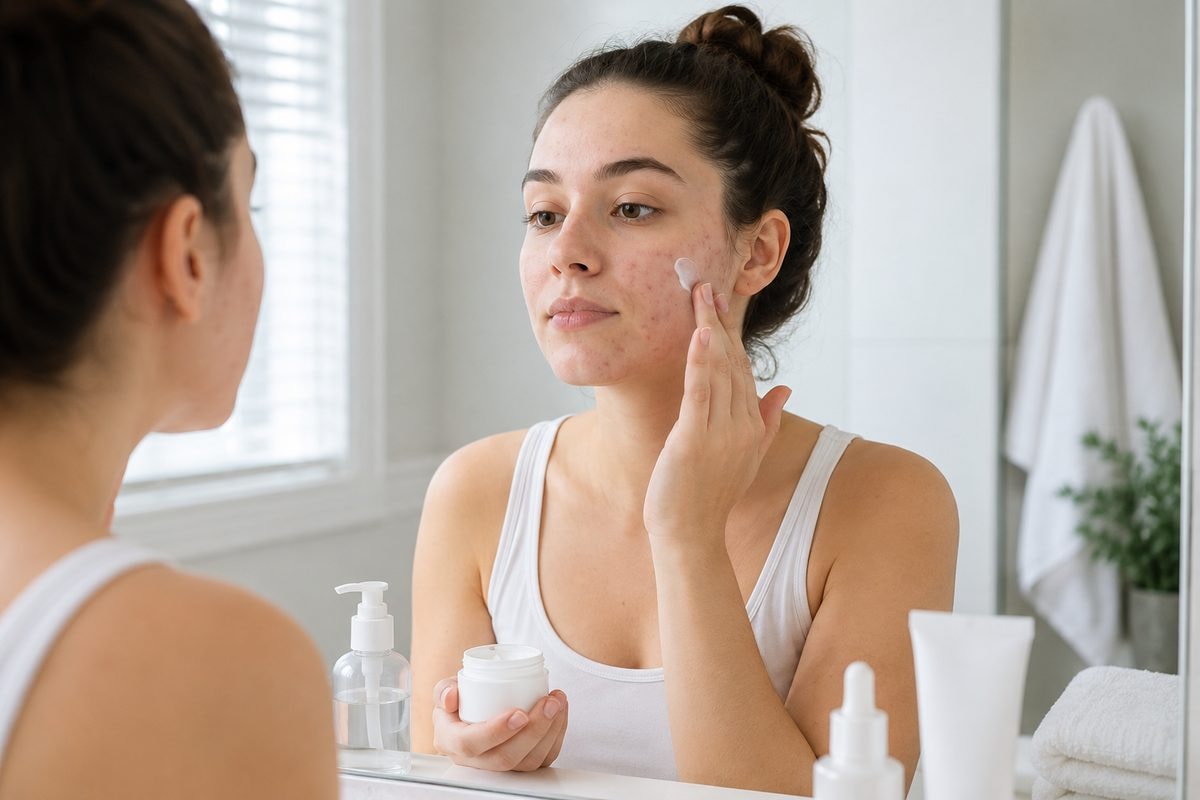
Acne on face areas such as the forehead, cheeks, chin, and jawline is especially noticeable, but similar changes can also appear on the chest, upper back, shoulders, and sometimes the lower back. These areas have many oil glands, which makes them more prone to blocked follicles.
Typical signs include open comedones, which look dark at the surface, and closed comedones, which look like small pale or skin-colored bumps. Inflamed papules are red or darker tender bumps, while pustules contain visible pus. Deeper nodules can feel firm and sore under the skin. Severe acne can leave darker marks, lighter marks, or indented scars after inflammation settles.
Not every spot is acne. Rosacea, folliculitis, perioral dermatitis, irritation from skin products, and some medication reactions can resemble it in adults. A doctor can usually assess the likely diagnosis from the appearance, location, history, and associated symptoms. Hormonal blood tests are not routinely needed for ordinary cases, but they may be considered if symptoms suggest a hormonal disorder, such as irregular periods, increased facial hair growth, or other signs of androgen excess.
Why acne happens
There is rarely one single cause. Hormones, inherited tendency, oil production, inflammation, skin-care habits, and some medicines can all play a role. During puberty, oil production often increases. In adulthood, flare-ups may be linked with menstrual cycles, hormonal contraception changes, stress, occlusive cosmetics, work environments, or simply a person's natural skin biology.
Some medicines can worsen acne-like eruptions in certain people, including corticosteroids, lithium, some epilepsy medicines, testosterone, and anabolic steroids. Heavy or greasy creams can also aggravate skin that is prone to blocked follicles. Heat, sweating, friction from masks or helmets, and repeated touching may make existing inflammation more noticeable.
Diet is a common concern. For most people, strict dietary restriction is not the main treatment. Some individuals notice personal triggers, and a generally balanced diet is reasonable, but the core treatment is usually skin-directed care and, when needed, prescription medication. It is better to avoid blaming a single food without a clear pattern, because that can make the problem feel more mysterious than it is.
Mild acne and everyday skin care
Mild acne often improves with a simple routine and enough time. The goal is to reduce blocked pores and inflammation while protecting the skin barrier. Over-washing, harsh exfoliation, alcohol-based toners, and frequent product switching can irritate the skin and make treatment harder to tolerate.
A practical routine can include:
- Gentle cleansing once or twice daily, especially after heavy sweating.
- A light, non-greasy moisturiser if the skin feels dry or tight.
- Non-comedogenic sunscreen and cosmetics when used.
- Avoiding squeezing or picking, particularly deep or painful spots.
- Giving active treatments several weeks before judging the result.
Benzoyl peroxide is a common non-prescription option for mild inflammatory breakouts. It can reduce bacteria and inflammation, but it may also dry or irritate the skin and can bleach fabrics. Starting slowly, using a small amount, and moisturising can improve tolerability. If the skin becomes very sore, swollen, or cracked, it is sensible to pause and ask for professional advice.
Acne treatment: what usually helps
Acne treatment depends on severity, skin sensitivity, previous treatment response, pregnancy plans, other medicines, and personal preferences. A doctor may recommend topical treatments, oral medicines, hormonal treatment for suitable patients, or referral to a dermatologist. The aim is not only to clear visible spots but also to reduce inflammation, prevent new lesions, and lower the risk of scarring.
Topical retinoids such as adapalene or tretinoin are often used to reduce blocked pores and help prevent new comedones. They can be very useful for comedonal and inflammatory acne, but improvement is usually gradual. Dryness, redness, and peeling are common early side effects. Many people do better when they start a few evenings per week and increase slowly as tolerated.
Azelaic acid can help with comedones and inflamed lesions and may be suitable for some people who cannot tolerate stronger options. Benzoyl peroxide may be used alone or with other treatments. Topical antibiotics such as clindamycin are sometimes used for inflamed pimples, but they should usually be combined with other medicines rather than used alone for long periods, because unnecessary antibiotic exposure can contribute to resistance.
How to treat acne when it is moderate or persistent
When self-care is not enough, treatment may need prescription medicines. For moderate inflammatory acne, a doctor may prescribe a combination of topical medicines, such as a retinoid plus benzoyl peroxide, or a topical antibiotic as part of a wider plan. Consistency matters: many effective treatments take several weeks to show clear benefit, and stopping too early can make it look as if nothing works.
Oral antibiotics from the tetracycline group may be used for a limited period when inflammation is more widespread. They are usually combined with topical treatment, often including benzoyl peroxide, to improve effectiveness and reduce the risk of resistance. Oral antibiotics are not a permanent cure, and symptoms can return after the course ends, so maintenance treatment may be needed.
For some women, combined hormonal contraception can be part of acne treatment, especially when contraception is also needed and there are no medical reasons to avoid it. This choice should be made with a clinician, because benefits, risks, migraine history, smoking, blood clot risk, age, and other health factors all matter. Hormonal treatment is not suitable for everyone and does not replace a proper skin-care plan.
Severe acne treatment and scarring risk
Severe acne deserves timely medical assessment. Deep nodules, cyst-like lesions, painful widespread inflammation, fast worsening, or early scarring are signs that self-care alone is unlikely to be enough. Early treatment can reduce pain, shorten the active inflammatory phase, and help prevent permanent scars.
Isotretinoin is an oral vitamin A-derived medicine used for severe, scarring, or difficult disease under specialist supervision. It can be highly effective, but it requires careful monitoring because it can cause significant dryness, affect blood tests in some people, and has strict pregnancy prevention requirements for patients who can become pregnant. It is not a casual first step or an over-the-counter option.
Scars are usually treated only after active inflammation is under control. Options may include laser treatment, chemical peels, microneedling, subcision, or other dermatological procedures depending on scar type and skin characteristics. These treatments aim to improve texture and appearance, but they rarely make scars disappear completely. Preventing scars by treating severe acne early is usually easier than correcting them later.
What helps acne without irritating the skin
A good plan should be effective enough to matter and gentle enough to continue. Many people stop treatment because the first weeks bring dryness, stinging, or peeling. This does not always mean the treatment is wrong; sometimes the skin simply needs a slower start, a smaller amount, or better moisturising alongside the active medicine.
Use active medicines on clean, dry skin unless the product instructions say otherwise. A pea-sized amount may be enough for the whole face for many topical medicines. Moisturiser can be used alongside treatment, and some people tolerate treatment better when they apply moisturiser first or shortly after the medicine. Sun protection is important because inflamed skin and some treatments can make the skin more sensitive to sunlight.
Try not to layer several strong actives at the same time without guidance. Retinoids, acids, benzoyl peroxide, scrubs, and exfoliating masks can quickly become too much together. If the skin is burning, cracked, or very swollen, it is better to simplify the routine and seek advice than to push through severe irritation.
How to prevent acne flare-ups
It may not be possible to prevent acne completely, especially when hormones and inherited tendency are involved. Still, a steady maintenance routine can reduce flare-ups. After the skin improves, stopping every treatment at once may allow blocked pores and inflammation to return.
Long-term prevention often relies on gentle cleansing, light moisturising, non-comedogenic products, and maintenance treatment when prescribed. Some people use a topical retinoid, azelaic acid, or a combination product a few times weekly after active symptoms settle. The right plan depends on how often symptoms return and how well the skin tolerates treatment.
Lifestyle habits can support skin health, although they are not a substitute for medical treatment. Sleep, stress management, regular exercise, and avoiding anabolic steroids are reasonable parts of a wider plan. If a specific cosmetic, hair product, face oil, or work-related exposure repeatedly triggers spots, changing that exposure may help.
When to seek medical help for acne
It is reasonable to contact a doctor if acne is painful, persistent, worsening, or affecting confidence and daily life. You do not need to wait until it is severe before asking for help. Medical treatment can be appropriate when self-care has not helped after a fair trial, when prescription options may be needed, or when there is a risk of scarring.
Seek non-urgent medical advice if spots are deep or tender, if marks or scars are developing, if symptoms are causing distress, or if the diagnosis is unclear. A clinician can check whether the problem is ordinary breakouts, another skin condition, or a medication-related eruption. They can also help build a plan that is realistic for your skin type and routine.
More urgent assessment is sensible if skin inflammation is rapidly spreading, there is fever or significant general illness, a large painful swelling develops, or lesions near the eyes are severe. These situations are not typical ordinary acne and may need prompt in-person evaluation.
How can Dokport help with acne?
Dokport can offer access to a remote doctor without a traditional appointment booking process. A doctor can assess acne symptoms through chat, ask about the type of spots, duration, pain, previous treatments, medication use, pregnancy considerations, and whether scarring is developing. Photos may help the doctor understand the pattern, although the final suitability of remote care depends on the situation.
A doctor can give personalised care guidance and may suggest self-care, pharmacy options, prescription treatment, follow-up, or referral when appropriate. Medication or sick leave may be prescribed when it fits the clinical situation, but these are never automatic. If the symptoms suggest severe acne, another diagnosis, a need for laboratory monitoring, or a condition that should be examined in person, the patient can be guided to further testing or an in-person visit.
The goal is fast, easy, and safe access to medical support. For many adults with common skin questions, remote assessment can be a useful first step. For deep, scarring, rapidly worsening, or complicated disease, the safest plan may include dermatologist assessment or face-to-face care.
Living with acne: confidence, expectations, and follow-up
Acne can feel small from the outside and very large to the person living with it. Visible skin symptoms may affect social confidence, dating, work, exercise, and the wish to be photographed. These effects are real, and they are a valid reason to seek help even if the condition is not medically dangerous.
One useful marker is function: whether you can wash, shave, wear sunscreen, exercise, sleep, and meet people without the skin problem dominating the day. Medical treatment is not only for the most dramatic cases. If the condition repeatedly changes your choices, causes pain, or leads to long periods of covering or avoiding normal activities, that burden matters. A good consultation should include both the visible skin findings and the practical effect on life, because treatment decisions are better when they reflect the whole picture.
It also helps to set realistic expectations. Many treatments work slowly because they are preventing new lesions as well as calming existing ones. A first review is often most meaningful after several weeks of consistent use, unless side effects are significant. Improvement may appear first as fewer new spots, less soreness, or shorter flare-ups before the skin looks fully clear.
Follow-up matters because symptoms change over time. A plan that is too weak may allow ongoing inflammation, while a plan that is too irritating may be abandoned. If the first treatment does not work, that does not mean nothing will help. It usually means the plan needs adjustment, more time, a different combination, or a higher level of care.
Key takeaways about acne
Acne is common, treatable, and not a sign of poor hygiene. It happens when blocked follicles, oil production, inflammation, and skin bacteria interact. Mild acne may respond to steady self-care and non-prescription treatment, while moderate or severe acne often needs prescription support.
The most important step is to match treatment to the skin problem. Blackheads and whiteheads, inflamed pimples, deep painful nodules, and scarring risk may require different approaches. Gentle routines, patience, and early medical help when symptoms persist can make a real difference.
People often want to know how to cure acne, how to stop acne, or how to get rid of acne quickly. A more medically realistic goal is to control the condition, reduce new spots, prevent scarring, and maintain clearer skin with a plan that can be continued safely. With the right support, most people can find a treatment approach that improves both the skin and everyday confidence.

Need a doctor?
Describe your symptoms in a remote appointment — a doctor assesses your situation 24/7.
Frequently asked questions
What is acne?
Is acne caused by poor hygiene?
What is the best acne treatment?
How long does acne treatment take to work?
Can mild acne be treated at home?
When should I see a doctor about acne?
What helps acne on the face?
Can acne leave permanent scars?
Is severe acne treatment different from mild acne treatment?
Can diet cure acne?
Should I pop pimples?
Can adults get acne?
Are antibiotics used for acne?
Is isotretinoin for everyone with acne?
Can remote care help with acne?
Read also
- Atopic Dermatitis
- Fungal infection: symptoms, treatment, and when to seek care
- Hives: symptoms, causes, treatment and when to seek medical advice
- Rosacea: what it is, why it affects the face and how it can be treated
- Scabies: symptoms, rash, treatment and when to seek care
- Herpes: Symptoms, Treatment, Causes, and When to Seek Medical Advice