
Rosacea: what it is, why it affects the face and how it can be treated
Key points
- Rosacea is a chronic skin condition causing facial flushing, persistent redness and inflamed bumps, most often on the cheeks, nose, forehead and chin.
- Subtypes vary: some people mainly have persistent redness and visible blood vessels, others develop papulopustular bumps resembling acne, thickened nose skin, or ocular symptoms like dryness and eyelid inflammation.
- Rosacea is not caused by poor hygiene, is not contagious, and is a different condition from acne even though the bumps can look similar.
- Treatment is stepwise: gentle skin care and daily sun protection help mild cases, while a doctor may add topical medicine, oral antibiotics or vascular laser treatment for more persistent redness or bumps.
- See a doctor if eye symptoms or vision changes occur, the nose skin thickens, self-care doesn't help within a few weeks, or the rash is painful, spreading or affecting daily life.
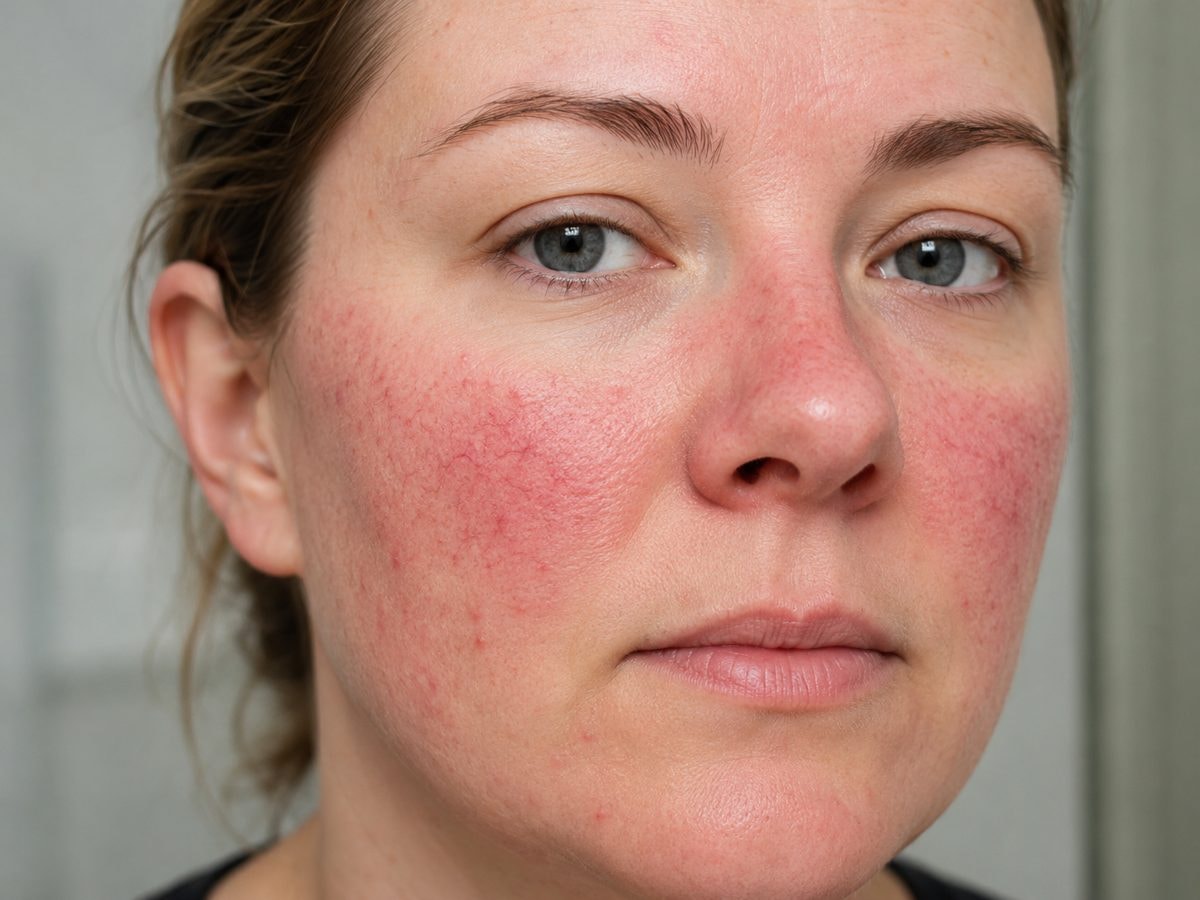
Rosacea is a common, long-term skin condition that most often affects the central face. It can cause flushing, persistent redness, visible small blood vessels, acne-like bumps, pustules, burning, stinging and, in some people, eye symptoms. The condition often comes and goes in phases: the skin may feel calmer for a while, then flare again after heat, sunlight, alcohol, spicy food, stress, exercise or irritating skin-care products.
Although rosacea is visible on the skin, it is not caused by poor hygiene and it is not contagious. It is also not exactly the same as acne, even when bumps and pustules are present. The right treatment depends on the type of symptoms, their severity, the areas affected and how much the condition interferes with everyday life.
What is rosacea?
Rosacea is an inflammatory skin condition that usually develops on the cheeks, nose, forehead and chin. For many adults, the first sign is facial flushing that lasts longer than ordinary blushing. Over time, the redness may become more constant, and small surface blood vessels may become visible. Some people also develop red bumps and pus-filled spots that resemble acne.
The condition is chronic, which means it can persist for years. That does not mean the skin is constantly inflamed or that symptoms cannot be improved. Many people learn to reduce flares with careful skin care, trigger management and medical treatment when needed.
Rosacea on face skin can look different from one person to another. One person may mainly notice red cheeks and a warm, burning feeling. Another may have bumps across the nose and cheeks. A third may have eye dryness or eyelid inflammation even when the facial rash is mild.
Rosacea face symptoms: what does it look like?
Rosacea most often affects the middle of the face. Typical symptoms include facial flushing, redness that lingers, visible fine blood vessels, sensitive skin, burning, stinging, dryness and acne-like bumps. The redness may be most obvious on the cheeks and nose, but rosacea on forehead, chin or around the mouth can also occur.
Common rosacea symptoms face-related include:
- Flushing that lasts longer than usual
- Persistent redness on the cheeks, nose, chin or forehead
- Small visible blood vessels
- Red bumps or pus-filled spots without blackheads
- Burning, stinging or tightness
- Dry, rough or easily irritated skin
- Eye dryness, grittiness, redness or eyelid irritation
Rosacea cheek redness may be mistaken for sensitivity, sun irritation or a cosmetic reaction. Rosacea nose redness may be confused with frequent flushing or broken capillaries. When bumps appear, the condition is sometimes called acne rosacea, although that phrase can be misleading because rosacea and acne are different conditions.
What causes rosacea?
The exact cause of rosacea is not fully known. It appears to involve several factors, including inherited tendency, inflammation in the skin, overreactive surface blood vessels, ultraviolet radiation, skin barrier sensitivity and the skin’s normal microscopic environment. Tiny mites that normally live on human skin may be more numerous in some people with rosacea, but they are not considered the single cause of the condition.
It is more useful to think of rosacea as a condition where the skin reacts too strongly to certain internal and external triggers. These triggers do not cause rosacea in everyone, but they can make symptoms flare in people who are prone to it.
Common triggers include sunlight, heat, sudden temperature changes, alcohol, hot drinks, spicy food, sweating, intense exercise, emotional stress, wind, cold air, sauna-like heat and harsh skin-care products. Not everyone reacts to the same things. Keeping a simple symptom diary can help identify patterns without turning daily life into a long list of restrictions.
Rosacea on cheeks, nose, forehead and neck
Rosacea is usually centered on the face, especially the cheeks and nose. Rosacea cheeks can appear as repeated flushing, diffuse redness, visible small vessels or acne-like bumps. Rosacea around nose may include redness on the sides of the nose, small bumps, enlarged surface vessels or thickened skin in more advanced cases.
Rosacea on forehead can occur, especially when the condition affects multiple areas of the face. It may appear as redness, bumps or sensitivity rather than the oily clogged pores typical of acne. Rosacea on the neck or chest is less typical, but some people experience flushing or redness that extends beyond the face. When symptoms are mainly outside the central face, a doctor may consider other possible causes as well.
The location matters because several other skin conditions can mimic rosacea. Acne, seborrheic dermatitis, perioral dermatitis, contact dermatitis, sun-related rashes and some autoimmune skin conditions can all cause facial redness or bumps. This is one reason persistent or unclear facial rash is worth assessing medically.
Acne rosacea and acne: how are they different?
The term acne rosacea is often used because rosacea can produce red bumps and pustules. However, rosacea is not the same condition as acne. Acne usually involves clogged pores, blackheads, whiteheads and deeper inflamed spots. Rosacea usually involves flushing, facial redness, visible blood vessels and sensitive skin, with bumps that do not typically include blackheads.
This difference matters because acne treatments can irritate rosacea-prone skin. Strong exfoliating acids, scrubs, high-strength retinoids or drying spot treatments may make burning and redness worse. A treatment plan that works for acne may not suit rosacea skin condition symptoms.
Some people can have both acne and rosacea. In that case, treatment may need to balance both problems carefully. A clinician can help separate what is acne, what is rosacea and what may be irritation from products.
Rosacea skin condition types
Rosacea is often described through patterns rather than one identical appearance. These patterns can overlap.
Erythematotelangiectatic rosacea mainly causes flushing, persistent redness and visible small blood vessels. This is the form often associated with couperose-prone skin. The skin may sting or burn easily and may react strongly to cosmetics, wind, heat or sunlight.
Papulopustular rosacea causes red bumps and pus-filled spots, usually in the central face. It can look like acne, but the skin often flushes and feels sensitive, and blackheads are usually absent.
Phymatous rosacea causes thickening of the skin, most often on the nose. This is less common and is seen more often in men. It develops gradually and can often be treated more effectively when addressed early.
Ocular rosacea affects the eyes and eyelids. It may cause dryness, burning, gritty sensation, eyelid inflammation, recurrent styes or red eyes. Eye symptoms should not be ignored, especially if they are persistent, painful or affect vision.
Rosacea treatment: what usually helps?
Rosacea treatment depends on the main symptom. Redness, bumps, pustules, visible vessels and eye symptoms may require different approaches. Treatment usually combines gentle skin care, trigger management and medication when symptoms are bothersome or persistent.
For mild symptoms, careful skin care and sun protection may reduce irritation and flares. For papules and pustules, topical medicines such as metronidazole, azelaic acid or ivermectin may be used. These treatments often take weeks to show clear benefit, so stopping too early can make them seem less effective than they are.
If symptoms are more inflamed, widespread or slow to settle, a doctor may prescribe oral antibiotics, often from the tetracycline group, for their anti-inflammatory effect. These are usually time-limited courses rather than permanent medication. In selected difficult cases, a dermatologist may consider other medicines.
Persistent redness and visible blood vessels may respond less to anti-inflammatory creams. In some cases, redness-reducing topical treatment or vascular laser treatment may be considered. Thickened nose skin may need specialist care. Eye symptoms may require eyelid hygiene, lubricating drops and sometimes prescription treatment.
Skin care for rosacea-prone skin
Rosacea-prone skin is often dry, sensitive and easily irritated. A simple routine is usually better than a complicated one. The goal is to protect the skin barrier, reduce stinging and avoid products that repeatedly trigger flares.
Cleanse with a mild, non-scrubbing cleanser and lukewarm water. Avoid rough washcloths, abrasive exfoliants and strongly fragranced products. After washing, apply a gentle moisturizer suitable for sensitive skin. Daily sun protection is important because ultraviolet exposure can worsen rosacea and trigger flares.
New products should be introduced one at a time. If the skin burns, stings or becomes more inflamed after a product, stop using it and give the skin time to calm down. Makeup can be used if it does not irritate the skin. Green-tinted or redness-neutralizing products may help some people feel more comfortable, but they should not replace treatment if symptoms are active.
Cortisone creams should not be used on suspected rosacea unless specifically advised by a doctor. They may seem to calm redness at first but can worsen rosacea-like eruptions or make the skin more reactive with repeated use.
Managing triggers without over-restricting life
Rosacea triggers are personal. One person may flare after sunlight and alcohol, while another mainly reacts to heat, stress or skin-care products. The aim is not to avoid every possible trigger, but to notice the ones that reliably affect your skin.
A practical approach is to track flares for a few weeks. Note what happened in the previous day: sun exposure, exercise, hot drinks, spicy food, alcohol, sauna-like heat, cold wind, new cosmetics or stress. If the same trigger appears repeatedly, try modifying it rather than removing it completely.
For example, you might choose shade and sunscreen, let hot drinks cool slightly, reduce very spicy meals during active flares, protect the face in cold wind or choose lower-intensity exercise when the skin is already inflamed. Small adjustments are often easier to maintain than strict rules.
When should you see a doctor about rosacea?
You should consider medical advice if facial redness, bumps or burning persist for more than a short period, if self-care is not enough, or if symptoms affect confidence, work, sleep or daily comfort. Early treatment may help reduce prolonged inflammation and prevent symptoms from becoming harder to manage.
A medical assessment is especially useful if the rash is painful, spreading, unusual, one-sided, scaly, crusted or associated with swelling. A doctor can check whether the problem is rosacea or another condition, such as acne, dermatitis, infection, lupus-related rash or a sun-related eruption.
Eye symptoms deserve particular attention. If you have ongoing eye dryness, grittiness, redness, eyelid inflammation, recurrent styes, light sensitivity, eye pain or changes in vision, seek medical advice. Eye rosacea can require treatment beyond ordinary facial skin care.
Seek urgent care if facial redness is accompanied by fever, rapidly increasing swelling, severe pain, spreading warmth, or if eye pain and vision changes appear suddenly. Those symptoms are not typical of ordinary rosacea flares and may need prompt evaluation.
How can Dokport help with rosacea?
Dokport can help when you want a doctor’s view on facial redness, bumps, flushing or suspected rosacea without a traditional appointment booking process. Through chat, a doctor can assess your symptoms, ask clarifying questions and help you understand whether the picture fits rosacea or whether another condition should be considered.
A doctor can give personalized care guidance, including advice on skin care, trigger management and when prescription treatment may be appropriate. Medication may be prescribed when it suits the situation. If the symptoms suggest eye involvement, another diagnosis, severe inflammation or the need for procedures, you may be guided to further testing or an in-person visit.
The aim is fast, easy and safe access to medical support. Remote care can be useful for many rosacea-related concerns, but it does not replace in-person assessment when the skin or eye symptoms need closer examination.
Living with rosacea day to day
Rosacea can feel frustrating because it affects the face, changes from day to day and may react to ordinary parts of life. It is common to feel self-conscious during flares, especially when redness appears suddenly or bumps are mistaken for acne. A calm plan can make the condition feel less unpredictable.
Start with the basics: gentle cleansing, moisturizing, sun protection and avoiding known irritants. Add medical treatment when symptoms are persistent, inflamed or distressing. Give treatments enough time to work, because rosacea often improves gradually rather than overnight.
It can also help to separate skin appearance from personal fault. Rosacea is not caused by being unclean, careless or unhealthy. It is a real skin condition with inflammatory and vascular features. With the right approach, many people can reduce flares, improve comfort and feel more in control of their skin.

Need a doctor?
Describe your symptoms in a remote appointment — a doctor assesses your situation 24/7.
Frequently asked questions
What is rosacea?
What does rosacea look like?
Is rosacea the same as acne?
What causes rosacea?
Can rosacea affect the nose?
Can rosacea appear on the forehead?
Can rosacea appear on the neck or chest?
What triggers rosacea flare-ups?
What is the best rosacea treatment?
How long does rosacea treatment take to work?
Should I use steroid cream for rosacea?
Can rosacea affect the eyes?
Is rosacea contagious?
Can diet cure rosacea?
When should I see a doctor for rosacea?
Read also
- Acne: symptoms, causes, treatment options, and when to get help
- Atopic Dermatitis
- Fungal infection: symptoms, treatment, and when to seek care
- Hives: symptoms, causes, treatment and when to seek medical advice
- Scabies: symptoms, rash, treatment and when to seek care
- Herpes: Symptoms, Treatment, Causes, and When to Seek Medical Advice