

Hand, Foot and Mouth Disease in Adults: Symptoms, Contagion and When to See a Doctor
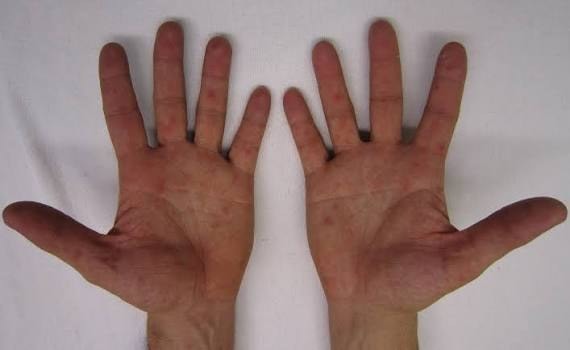
Hand, foot and mouth disease is usually thought of as something that only happens to toddlers, but it spreads to adults far more often than people expect — especially when there is a young child or a nursery-aged sibling at home. Hand foot and mouth disease is a highly contagious rash illness caused by enteroviruses, most commonly a Coxsackievirus. In an adult, the illness can start out looking like an ordinary cold or sore throat, only revealing itself a few days later when blisters appear in the mouth, on the hands and on the feet. This article covers what hand foot and mouth disease feels like in an adult, how long it stays contagious, what genuinely helps at home, and when the symptoms are worth a doctor's opinion.
What is hand, foot and mouth disease?
hand, foot and mouth disease is a highly contagious rash illness caused most often by Coxsackievirus A or another enterovirus. The name describes it well: the classic findings are small blisters and reddish bumps on the palms, the soles of the feet and the lining of the mouth. The same family of viruses is behind several other everyday illnesses, including the common cold, viral conjunctivitis, a mouth infection known as herpangina, and — very rarely — viral meningitis. hand, foot and mouth disease itself is the most familiar of these presentations, and it spreads particularly easily in late summer and early autumn, when children return to daycare and school and close contact between children increases. It travels through a household easily, because the virus is shed from both the respiratory tract and the gut before any symptoms are visible at all.
Enteroviruses are among the most common infectious agents that affect humans, and the same viral family can produce very different pictures depending on which part of the body the infection settles in. Most infections are silent or cause nothing more than a mild head cold, and the person affected never finds out an enterovirus was involved. When the infection settles in the eye, the result is conjunctivitis, with redness and discharge but no other symptoms. When blisters are confined to the back of the mouth and throat without any skin rash, the illness is called herpangina, which resembles a herpes mouth infection but usually resolves faster and more gently, without the bleeding gums typical of herpes. In rare cases, the same viral family can cause viral meningitis, with high fever, a severe headache and neck stiffness; the outlook is good in the vast majority of cases, though severe symptoms can call for hospital observation. Rarer still is encephalitis, involving profound tiredness, difficulty speaking, reduced alertness or unusual behaviour, which needs urgent medical attention. Despite this wide range of possible presentations, the overwhelming majority of cases a family encounters turn out to be completely harmless and clear up on their own within days or at most a couple of weeks.
Hand, foot and mouth in adults — why grown-ups get it too
Most cases of hand, foot and mouth disease are diagnosed in children under school age, but the virus doesn't check ID. Recognising hand foot and mouth in adults quickly matters most when there is already a sick child at home, since many adults assume their own sore throat and fever must be something unrelated. Hand foot and mouth disease in adults typically follows a household exposure: the virus travels through shared hands, towels or toys to other family members before anyone suspects a thing. An adult's illness often looks, at first, like a cold or a throat infection — fever, a sore throat, a headache and fatigue can all come first, with the familiar blisters only appearing a couple of days later to reveal the real cause. One difference from children is that in an adult the skin lesions itch more often and more intensely, whereas in children the rash typically doesn't itch at all. Many adults also underestimate what's happening to them at first, because hand foot and mouth disease isn't the illness people reach for when they think about their own symptoms — especially if the blisters stay minor or are limited to the hands.
The practical side of catching this as an adult is often the hardest part: fatigue and a sore throat can feel like an ordinary cold at first, and plenty of people try to push through a normal workday before the blisters give the real cause away. Sleep can suffer in the first day or two, as mouth pain and itchy skin make it harder to settle, so it's worth building in extra rest and pushing back the heaviest tasks at work for a few days. In a household where one person falls ill, it's realistic to expect the infection to move through the whole family within a couple of weeks, since young children tend to show symptoms quickly while adults often lag behind by several days. It's worth postponing travel or larger social gatherings until the fever has settled and the blisters have dried, since close contact at airports, on trains or at parties raises the risk of passing the infection on to others. Avoiding shared towels, cups and toys, together with frequent handwashing, goes a long way toward containing spread at home without anyone needing to isolate completely.
Hand, foot and mouth disease symptoms in adults and children
Hand foot and mouth disease symptoms typically begin three to seven days after exposure with mild fever, a sore throat and general tiredness. Small, stinging ulcers often appear in the mouth first, making eating and drinking uncomfortable even before anything shows up on the skin. Within a couple of days, reddish bumps appear on the hands, the soles of the feet, and sometimes the buttocks, developing into small, fluid-filled blisters. Blisters on the soles of the feet can be painful enough to make walking uncomfortable, and as the illness resolves the skin can peel quite noticeably for a week or two afterwards. Some people also get abdominal pain, loose stools or a poor appetite, while others experience nothing beyond a mild mouth infection with no rash at all. This variability is exactly what makes the illness tricky to recognise: the same virus can give one person little more than a runny nose and another a textbook blistering rash.
Hand, foot and mouth in the mouth and on the skin — telling it apart from chickenpox
For many people, the mouth symptoms are the worst part of the whole illness, since even small ulcers on the tip of the tongue, the inside of the cheek or the roof of the mouth sting sharply when eating, particularly anything acidic or salty. On the skin, blisters and bumps concentrate on the palms, the sides of the fingers, the soles of the feet and between the toes, though they can also appear on the knees, buttocks or forearms. Hand foot and mouth disease is usually told apart from chickenpox by the location of the blisters and whether they itch: chickenpox spreads widely across the whole body and is almost always intensely itchy, while hand foot and mouth disease concentrates on the hands, feet and mouth and doesn't usually itch in children. In adults the line is blurrier, because itching is more common in adults with hand foot and mouth disease too. If the origin of a rash is genuinely uncertain, or it spreads unusually widely, a doctor's assessment can confirm the diagnosis, though in most cases the typical pattern of symptoms is enough on its own without any tests.
How the diagnosis gets confirmed, if symptoms are worrying
In a typical case, no laboratory tests are needed at all — a doctor recognises the picture from the appearance of the mouth, hands and feet together with the history described by the patient. A sample is really only taken when the picture is unusual, symptoms drag on longer than expected, or the doctor wants to rule out another, more serious cause behind the same symptoms. A sample can, if needed, be taken from stool, the throat or a skin blister and sent to a laboratory for more detailed viral typing. Most of the assessment still comes down to a careful history and an examination of the skin and mouth, and there's usually no need to wait on test results before starting to manage symptoms. If your own situation, or your child's, departs from what's typical — an unusually widespread rash, unusually severe pain, or a fever that drags on — it's worth booking an assessment rather than sitting with the uncertainty for too long.
Incubation period and how contagious hand, foot and mouth disease is
The incubation period for hand foot and mouth disease is usually three to seven days after exposure, occasionally stretching to as long as ten days. Hand foot and mouth disease spreads through both respiratory droplets and stool, and the risk of passing it on is actually highest before any symptoms are even visible — this is a key reason the illness travels so easily through daycare groups and within families. In practice, the virus spreads through coughing, sneezing, direct contact and, above all, unwashed hands, which makes careful hand hygiene the single most effective way to limit spread at home. The virus can keep being shed in stool for weeks after the rash and fever have already disappeared, which explains why the same household can go through more than one round of hand foot and mouth disease within a short space of time.
When does hand, foot and mouth disease stop being contagious?
As a general rule of thumb, the worst of the contagious period is over once the fever has settled and general wellbeing has clearly improved — at that point it's usually fine to return to normal activities, even if the skin still shows some peeling or a few healing blisters. Complete freedom from any risk of passing the virus on is hard to guarantee, though, since it can keep being shed in stool long after the visible symptoms have gone. That's why it's worth keeping up careful handwashing even once you feel completely back to normal. Most people can return to work as soon as the fever is gone and they feel able to function normally, since hand foot and mouth disease doesn't call for formal isolation or a doctor's sign-off before going back.
Hand, foot and mouth disease during pregnancy
Hand foot and mouth disease during pregnancy often causes worry, but the illness hasn't been linked to an increased risk of birth defects, and it doesn't usually call for any extra monitoring during pregnancy. In most pregnant women the illness runs just as mildly as in any other adult and clears up on its own within about a week. The one situation worth paying attention to is an infection acquired right around the time of delivery: there's then a small chance the newborn could pick up the infection during birth, although even in newborns the illness is mild and temporary in the great majority of cases. If a pregnant woman suspects she has caught it, talking through the symptoms and timing with a doctor helps confirm there's nothing extra to worry about. Ordinary fever and pain relief during pregnancy is fine with pregnancy-safe painkillers, and staying well hydrated and rested matters just as much as it does for anyone else affected. Many pregnant women also wonder whether they can keep up with everyday life, such as work or looking after other children, while unwell — in most cases they can, as long as general wellbeing allows it and enough rest is built in.
How to manage hand foot and mouth disease at home
There's no specific antiviral treatment or vaccine for hand foot and mouth disease, so care is always aimed at easing symptoms while the illness resolves on its own. Fever and aches can be eased with an ordinary over-the-counter pain reliever taken according to the label, and stinging mouth pain is helped by cool, soft food that needs little or no chewing, such as yoghurt, ice cream or a chilled drink. Staying properly hydrated matters especially when mouth pain makes drinking difficult, since dehydration is a bigger problem than the illness itself, particularly for young children. It's best not to pop skin blisters, since intact skin protects against infection better than a blister that's been rubbed raw or burst, and peeling skin can be soothed with a plain moisturiser to ease any tightness or itching. Itching itself can be eased with a cooling gel or a cold compress, and loose, breathable clothing reduces friction over blistered areas. Keeping nails short helps prevent scratching from breaking the skin, which lowers the risk of a secondary bacterial infection on healing skin. In the shower or bath, lukewarm water and a mild, fragrance-free wash are gentler on already-irritated skin than very hot water or strong soap. For most people, rest, adequate fluids and pain relief are enough, since hospital care or prescription medicine is only rarely needed.
When do symptoms of hand, foot and mouth disease need a doctor's opinion?
Most of the time, hand foot and mouth disease can be managed entirely at home, and a doctor's assessment isn't needed if the cause of the symptoms is clear and general wellbeing stays reasonably good. It's worth booking a doctor's appointment, though, if the fever climbs unusually high or lasts several days, if mouth blisters are so painful that drinking properly becomes difficult, if the skin lesions look infected — redder, swollen or weeping — or if there's genuine uncertainty about what's causing the symptoms in the first place. Urgent assessment is needed without delay if there's a severe headache together with neck stiffness, unusual drowsiness or a reduced level of consciousness, confusion, seizures or any other clearly abnormal behaviour, since these can, in rare cases, point to a viral meningitis or encephalitis. With these symptoms, it's not worth waiting to see if things improve on their own — seek a doctor's or an emergency assessment straight away.
How can Dokport help with hand foot and mouth disease?
If the cause of your symptoms isn't clear, or the rash, fever and mouth pain are worrying you, Dokport lets you reach a doctor remotely without a traditional appointment process. A doctor can assess the situation over chat, based on photos and a description of the symptoms, and give personalised guidance on what the symptoms suggest and what would help at home. Where appropriate, a doctor may prescribe medication to ease pain or another symptom, or issue a sick note if working capacity is genuinely affected, and will direct you to further tests or an in-person appointment if the symptoms suggest something that can't be reliably judged remotely. The aim is a fast, safe way to get a doctor's view on a situation, particularly when your own uncertainty or a busy schedule makes a traditional booking difficult. This suits a household where several family members fall ill one after another and the daily schedule is already stretched thin, since a message can be sent in the evening or on a weekend without arranging separate childcare or waiting for an appointment slot.
What about a child's hand foot and mouth disease — what a parent should know
Although this article focuses on hand foot and mouth disease in adults, plenty of adults meet the illness through their child first, and end up wondering at the same time whether their own or their child's situation needs a doctor's opinion. Hand foot and mouth disease in a child is usually very mild and doesn't need special treatment: fever, mouth pain and blisters on the hands and feet typically settle within a week without any lasting effects. A child can go back to daycare or school as soon as the fever is gone and general wellbeing allows normal activity, since hand foot and mouth disease doesn't require formal isolation. It's worth seeing a paediatrician if a child's fever is unusually high, general wellbeing clearly worsens, the skin lesions become infected, or the child has a severe headache, vomiting or other neurological symptoms, since none of these belong to the ordinary picture.
Mild hand foot and mouth disease, or something else?
A mild case of hand foot and mouth disease can go almost unnoticed: perhaps just a slightly raised temperature, a few bumps on the palms and a short-lived sore throat that settles within a couple of days without any particular treatment. The line between a mild, self-limiting illness and a situation that needs a closer assessment is better drawn from how severe and how fast-moving the symptoms are than from the appearance of the rash alone. If a rash looks unusually widespread, comes with a high fever or severe pain, or there's genuine confusion in the household about what's causing a blistering rash, a doctor's assessment can settle the question calmly. It's also worth remembering that a mild case doesn't need any more monitoring than an ordinary cold would — checking in on how someone feels now and then, and keeping up with rest, fluids and pain relief as needed, is enough.
Summary
Hand foot and mouth disease is usually a mild, self-limiting viral illness best known as a childhood complaint, yet it spreads surprisingly easily to adults in the same household. The symptoms — fever, a sore throat, stinging mouth ulcers and blisters on the hands and feet — usually last under a week, and home care is enough for most people. Adults and hand foot and mouth disease don't always go together in people's minds, but the combination is common wherever young children spend time in groups. Understanding the incubation period, how it spreads, and the rare warning signs that call for a prompt doctor's opinion makes it possible to judge your own situation, and your family's, calmly and without unnecessary worry — and help is available quickly by remote consultation too, whenever it's needed.
Key points
- Hand foot and mouth disease is a highly contagious rash illness caused by enteroviruses, most often a Coxsackievirus, and is also known simply as HFMD.
- Although it's best known as a childhood illness, it spreads readily to adults in the same household, and adult blisters tend to itch more than children's do.
- The incubation period is usually three to seven days, the illness is contagious even before symptoms appear, and a settled fever with improved wellbeing is the best sign the contagious risk has passed its peak.
- Home care — rest, adequate fluids, cool soft food and pain relief as needed — is enough for most people, since there's no specific antiviral treatment.
- A doctor's opinion should be sought quickly if there's a severe headache, neck stiffness, unusual drowsiness or any other clearly abnormal symptom.

Need a doctor?
Describe your symptoms in a remote appointment — a doctor assesses your situation 24/7.
Frequently asked questions
What usually causes hand foot and mouth disease?
Can adults get hand foot and mouth disease?
How long is the incubation period for hand foot and mouth disease?
When does hand foot and mouth disease stop being contagious?
What are the most typical hand foot and mouth disease symptoms?
Does hand foot and mouth disease always cause a visible rash?
Is hand foot and mouth disease dangerous?
Can hand foot and mouth disease be treated at home?
Does a painkiller help with hand foot and mouth disease symptoms?
Is antibiotic treatment needed for hand foot and mouth disease?
Can you go to work with hand foot and mouth disease?
Is hand foot and mouth disease dangerous during pregnancy?
How is hand foot and mouth disease different from chickenpox?
Can hand foot and mouth disease come back?
Can hand foot and mouth disease be prevented?
Can a remote doctor help with hand foot and mouth disease?
When should a child's hand foot and mouth disease be seen by a doctor?
Why does hand foot and mouth disease become more common in late summer?
Can you catch hand foot and mouth disease more than once in the same season?
How do you know it isn't herpes?
Read also
- Hand, Foot and Mouth Disease at Daycare: Keeping It From Spreading This Autumn
- Scabies: symptoms, rash, treatment and when to seek care
- Herpes: Symptoms, Treatment, Causes, and When to Seek Medical Advice
- Shingles: Symptoms, Rash, Treatment, Recovery, and When to Seek Care
- Adenovirus: Symptoms, Infection, Conjunctivitis, and Treatment Guide
- Chlamydia: Symptoms, Testing and Treatment